
Description
Red Root
(Ceanothus americanus)
Ceanothus americanus — Red Root, New Jersey Tea, or Mountain Sweet — is a low-growing deciduous shrub of the family Rhamnaceae native to the eastern and central United States and Canada, found in dry, open woodlands, prairies, and forest edges from Quebec and Manitoba south to Florida and Texas. The common name “Red Root” refers to the plant’s distinctive deep red inner root bark — a vivid, striking color caused by the plant’s high content of red pigment compounds. The name “New Jersey Tea” has a remarkable historical origin: during the American Revolutionary War, when British-imported Chinese tea became prohibitively expensive and politically charged, American colonists turned to the dried leaves of Ceanothus americanus as a patriotic substitute — brewing them into a tea that, while botanically unrelated to Camellia sinensis, provided a pleasant, mild beverage. The plant was reportedly used by soldiers at Valley Forge, and it became one of the most widely used tea substitutes of the Revolutionary era. This product is Wildcrafted — harvested from its native North American habitat.
Ceanothus americanus has a long and well-documented history of use in the traditional botanical practices of numerous Indigenous peoples of eastern North America, including the Cherokee, Iroquois, Chippewa, and many others, where the root was one of the most widely used botanicals. It was also a prominent botanical in 19th-century American eclectic medicine, where it was considered one of the most important lymphatic and circulatory botanicals in the eclectic materia medica. Red root is commonly found in traditional herbal formulas alongside burdock, violet leaf, echinacea, and red clover.
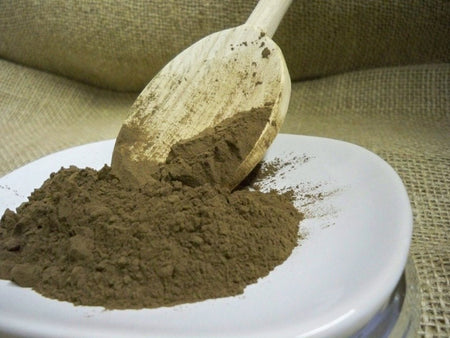
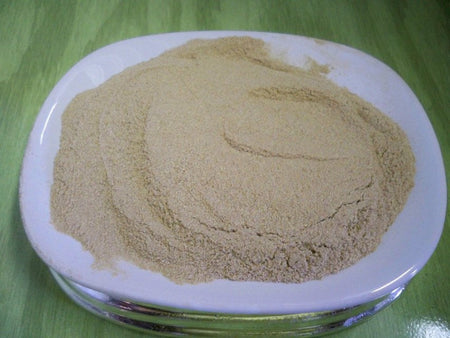
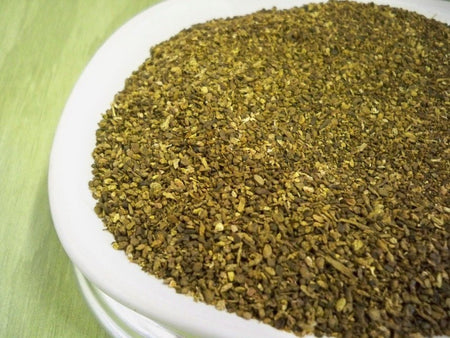
The root contains a distinctive array of phytochemicals including ceanothic acid and ceanothenic acid (pentacyclic triterpene acids characteristic of the Ceanothus genus), integerrine, americine, and ceanothamine (isoquinoline alkaloids), flavonoids (including quercetin and kaempferol derivatives), tannins (including condensed tannins responsible for the astringency), red pigment compounds (responsible for the characteristic deep red color of the inner root bark), saponins, and plant acids. Available in Cut & Sifted and Powder forms. Wildcrafted.
Product Highlights
- Cut & sifted and powdered root of Ceanothus americanus — Red Root / New Jersey Tea / Mountain Sweet
- Wildcrafted — harvested from its native eastern North American woodland habitat
- One of the most historically significant botanicals in 19th-century American eclectic medicine
- Used in the traditional botanical practices of the Cherokee, Iroquois, Chippewa, and many other Indigenous nations
- The leaves were used as a Revolutionary War-era tea substitute — brewed by American colonists when British tea became too costly
- Rich in ceanothic acid, isoquinoline alkaloids, condensed tannins, and characteristic red pigment compounds
- Commonly combined with burdock, violet leaf, echinacea, and red clover in traditional herbal formulas
- Available in Cut & Sifted and Powder forms
How to Use
Herbal Tea (Decoction): Simmer 1 teaspoon of cut & sifted red root in 8 oz of water for 15–20 minutes; strain. The flavor is mildly astringent with a pleasant, slightly sweet character. Tincture: Use in alcohol-based tincture preparations. Herbal Blends: Traditionally combined with burdock root, violet leaf, echinacea, and red clover in traditional herbal formulas.
Available in Cut & Sifted (4 oz, 8 oz, 16 oz) and Powder (4 oz, 8 oz, 16 oz). Wildcrafted.
These statements have not been evaluated by the Food and Drug Administration. This product is not intended to diagnose, treat, cure, or prevent any disease. Consult your healthcare provider before use if you are pregnant, nursing, taking medications, or have a medical condition. Keep out of reach of children.
Customer Reviews
Always have what I need at good prices and the herbs are excellent quality.
I love it
Related products