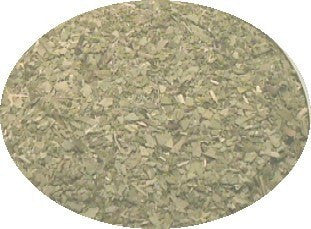
Description
Yerba Mate Leaf
(Ilex paraguariensis)
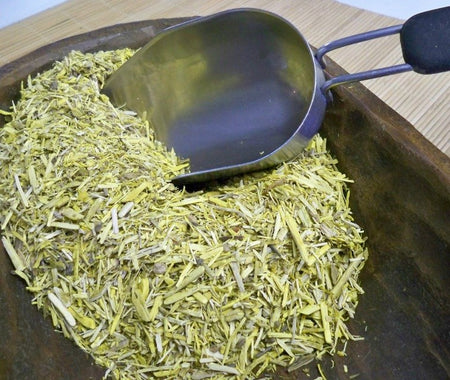
Ilex paraguariensis — Yerba Mate, Paraguay Tea, or South American Holly — is a species of holly of the family Aquifoliaceae native to the subtropical Atlantic forests of South America, where it grows as a large shrub or small tree in the understory of the rainforests of southern Brazil, Paraguay, Uruguay, and northeastern Argentina. Ilex paraguariensis is one of the most culturally significant and widely consumed botanical beverages in the world — mate (pronounced mah-teh) is the national drink of Argentina, Uruguay, and Paraguay, consumed daily by an estimated 90% of the Argentine population and deeply embedded in the social fabric of South American culture as a ritual of hospitality, friendship, and community. The traditional preparation of mate involves steeping the dried and aged leaves in hot (not boiling) water in a hollowed gourd (mate or calabaza) and drinking through a metal straw with a filter (bombilla) — a practice that has been central to the cultures of the Guaraní people of South America for centuries before European contact. The Guaraní called the plant ka’a (herb) and the gourd mate — from the Quechua mati (cup or gourd). Jesuit missionaries who encountered the Guaraní in the 17th century adopted and spread mate cultivation throughout the region, earning the plant the nickname “Jesuit’s tea” or “Jesuit’s herb” in early European accounts. Today, yerba mate is consumed across South America, Europe, the Middle East (particularly Syria and Lebanon, where it was introduced by South American immigrants), and increasingly worldwide as a caffeinated botanical beverage. Ilex paraguariensis is one of only a handful of plants in the world that naturally contain caffeine, theobromine, and theophylline simultaneously — the same trio of methylxanthines found in cacao, tea, and coffee respectively — giving mate its characteristic sustained, smooth energy profile. Our Yerba Mate Leaf is the dried leaf of Ilex paraguariensis, available in cut & sifted form for traditional mate preparation and herbal tea use.
Ilex paraguariensis leaf contains one of the most well-documented phytochemical profiles of any South American botanical, including caffeine (typically 0.7–1.7% of dry weight — comparable to tea, lower than coffee), theobromine (typically 0.3–0.9%), theophylline (trace), chlorogenic acids (the primary phenolic compounds — including 5-caffeoylquinic acid, 3-caffeoylquinic acid, 4-caffeoylquinic acid, 3,4-dicaffeoylquinic acid, 3,5-dicaffeoylquinic acid, and 4,5-dicaffeoylquinic acid — among the highest concentrations of chlorogenic acids of any commonly consumed beverage plant), caffeic acid, ferulic acid, rutin, quercetin, kaempferol, myricetin, luteolin, apigenin, ursolic acid, oleanolic acid, alpha- and beta-amyrin, saponins (including matesaponins 1–5), tannins, inulin, polysaccharides, vitamin C, vitamin B1 (thiamine), vitamin B2 (riboflavin), vitamin B3 (niacin), vitamin B5 (pantothenic acid), vitamin E, calcium, potassium, magnesium, phosphorus, iron, manganese, zinc, copper, and selenium. Available in Cut & Sifted form.
⚠️ Caffeine Note: Yerba mate contains naturally occurring caffeine (approximately 0.7–1.7% dry weight). Individuals sensitive to caffeine, pregnant or nursing women, children, and those with heart conditions or anxiety disorders should use with caution and consult a qualified healthcare provider before use.
Product Highlights
- Dried leaf of Ilex paraguariensis — Yerba Mate, the national beverage of Argentina, Uruguay, and Paraguay; consumed daily by an estimated 90% of the Argentine population
- One of only a handful of plants in the world that naturally contain caffeine, theobromine, and theophylline simultaneously — the same trio of methylxanthines found in coffee, cacao, and tea
- Used by the Guaraní people of South America for centuries before European contact; adopted and spread by Jesuit missionaries in the 17th century — earning the nickname “Jesuit’s Tea”
- Among the highest botanical sources of chlorogenic acids of any commonly consumed beverage plant — the same phenolic compounds found in green coffee bean extract
- Caffeine content (0.7–1.7% dry weight) is comparable to tea and lower than coffee — traditionally described as providing a smooth, sustained energy without the sharp peak and crash of coffee
- Rich in rutin, quercetin, kaempferol, ursolic acid, and matesaponins (saponins unique to Ilex paraguariensis)
- Broad spectrum of B vitamins, vitamin C, vitamin E, and minerals including potassium, magnesium, calcium, iron, and manganese
- Available in Cut & Sifted form (2 oz, 4 oz, 8 oz, 16 oz)
How to Use
Traditional Mate (Gourd Method): Fill a mate gourd or small vessel ⅔ full with dried yerba mate leaf. Insert a bombilla (filtered metal straw). Pour hot water (150–160°F / 65–70°C — not boiling) over the leaves. Drink through the bombilla and refill with hot water multiple times — the same leaves can be steeped 8–12 times. Herbal Tea (Western Method): Steep 1–2 teaspoons of cut & sifted yerba mate in 8 oz of hot water (150–160°F) for 3–5 minutes; strain. Avoid boiling water, which can make the flavor harsh and bitter. The flavor is grassy, slightly smoky, and pleasantly bitter. Iced Mate: Prepare a strong cold infusion by steeping 2 tablespoons of yerba mate in 16 oz of cold water for 8–12 hours in the refrigerator; strain and serve over ice. Herbal Blends: Pairs well with peppermint, lemon verbena, lemongrass, and spearmint for a refreshing caffeinated herbal blend. Mate Latte: Prepare a strong mate infusion and combine with steamed milk or a plant-based milk alternative for a South American-inspired latte.
Available in Cut & Sifted (2 oz, 4 oz, 8 oz, 16 oz).
Contains naturally occurring caffeine. Keep out of reach of children. Use with caution if sensitive to caffeine. Not recommended during pregnancy or nursing without consulting a qualified healthcare provider. Store in a cool, dry place away from direct sunlight.
These statements have not been evaluated by the Food and Drug Administration. This product is not intended to diagnose, treat, cure, or prevent any disease.
Related products