Description
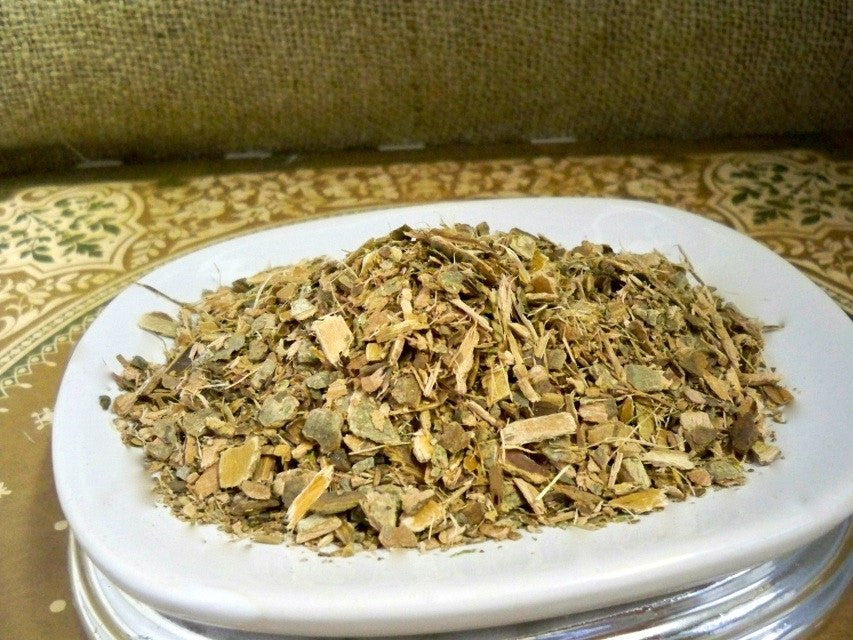
Witch Hazel Bark
(Hamamelis virginiana)
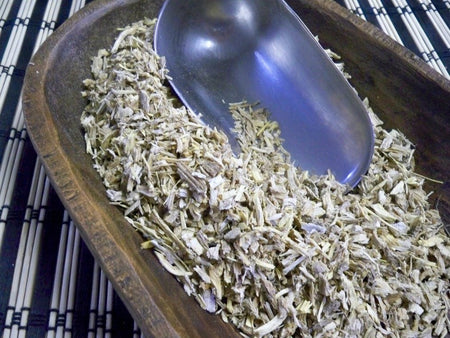
Hamamelis virginiana — Common Witch Hazel, American Witch Hazel, or Virginian Witch Hazel — is a deciduous large shrub or small tree of the family Hamamelidaceae native to eastern North America, where it grows in moist, well-drained woodland understories from Nova Scotia and Ontario south to Florida and Texas. Hamamelis virginiana is one of the most botanically distinctive native trees of the North American forest — it is the only tree native to the northeastern United States that blooms in late autumn and early winter, producing clusters of spidery, bright yellow flowers after its leaves have fallen, often while snow is on the ground. The genus name Hamamelis derives from the Greek hama (together with) and melon (apple or fruit) — referring to the unusual phenomenon of the plant simultaneously bearing flowers, ripe fruit, and next year’s buds. The common name “Witch Hazel” derives not from witchcraft but from the Middle English wiche (pliant, bendable) — a reference to the flexible branches historically used as divining rods. Hamamelis virginiana bark has one of the longest and most well-documented histories of use of any North American botanical — it was used extensively by numerous Indigenous nations including the Mohegan, Potawatomi, Iroquois, Ojibwe, and Cherokee, and it was one of the first North American botanicals to be adopted into formal European and American pharmaceutical practice. Witch hazel distillate (a steam distillation of the bark and twigs) has been an official USP/NF monograph ingredient and an FDA-regulated OTC drug ingredient for external use since 1990. Our Witch Hazel Bark is the dried bark of Hamamelis virginiana, offered as a botanical ingredient for herbal preparations.
Hamamelis virginiana bark contains one of the most well-characterized tannin profiles of any North American botanical, including hamamelitannin (a unique dimeric gallotannin found almost exclusively in Hamamelis species), galloylhamameloses, pentagalloylglucose, ellagitannins, gallotannins (total tannin content typically 8–12% of dry weight), gallic acid, ellagic acid, hamamelose (a unique sugar alcohol), quercetin, kaempferol, myricetin, isoquercitrin, astragalin, catechins (including catechin and epicatechin), proanthocyanidins, eugenol, hexenol, alpha-ionone, beta-ionone, calcium oxalate, resin, wax, calcium, potassium, magnesium, iron, manganese, and zinc. Available in Cut & Sifted and Powder forms.
Product Highlights
- Bark of Hamamelis virginiana — Common Witch Hazel, one of the most botanically distinctive native trees of eastern North America
- The only tree native to the northeastern U.S. that blooms in late autumn and winter — producing bright yellow flowers after leaf drop, often in snow
- Among the most historically significant North American botanicals — used by Mohegan, Potawatomi, Iroquois, Ojibwe, and Cherokee peoples; one of the first North American botanicals adopted into formal pharmaceutical practice
- Witch hazel distillate is an FDA-regulated OTC drug ingredient for external use (21 CFR 347) — reflecting the bark’s long-standing recognition as a botanical of significance
- Defining phytochemical: hamamelitannin — a unique dimeric gallotannin found almost exclusively in Hamamelis species
- Exceptionally high tannin content (8–12% dry weight) — one of the most astringent North American botanicals
- Rich in gallic acid, ellagic acid, quercetin, catechins, and proanthocyanidins
- Available in Cut & Sifted and Powder forms (2 oz, 4 oz, 8 oz, 16 oz)
How to Use
Decoction (Tea): Simmer 1 teaspoon of cut & sifted bark in 2 cups of water for 20–30 minutes; strain and cool. The flavor is strongly astringent and bitter — characteristic of high-tannin bark botanicals. Powder: Use ½–1 teaspoon in decoctions or incorporate into herbal blends. Herbal Blends: Pairs well with complementary astringent botanicals such as white oak bark, raspberry leaf, or yarrow in custom herbal formulations. Tincture Base: Witch hazel bark is a traditional tincture ingredient; steep in food-grade alcohol per standard tincture ratios. Topical Preparations: Prepare a strong decoction, cool completely, and apply externally as desired — witch hazel bark has a long tradition of external use in North American botanical practice.
Available in Cut & Sifted and Powder (2 oz, 4 oz, 8 oz, 16 oz).
Keep out of reach of children. Store in a cool, dry place away from direct sunlight.
These statements have not been evaluated by the Food and Drug Administration. This product is not intended to diagnose, treat, cure, or prevent any disease.
Related products