Description
Vanilla Beans
(Vanilla planifolia)
Vanilla planifolia — Vanilla, Bourbon Vanilla, or Madagascar Vanilla — is one of the most beloved, complex, and economically significant spices in the world, the cured seed pod of a tropical climbing orchid of the family Orchidaceae native to eastern Mexico and Central America, and the only orchid species cultivated commercially for food. Vanilla planifolia is the second most expensive spice in the world by weight (after saffron) — a reflection of the extraordinary labor required to produce each vanilla bean. The vanilla orchid produces large, greenish-yellow flowers that open for only a single day and must be hand-pollinated within hours of opening — in their native Mexico, they were pollinated by a specific species of Melipona bee and by hummingbirds, but outside Mexico, every vanilla flower in the world is pollinated by hand, one by one, by skilled agricultural workers. After pollination, the green seed pods take 9 months to mature, and the cured vanilla beans that reach the market represent 6–9 months of additional careful curing — a process of blanching, sweating, drying, and conditioning that transforms the odorless green pod into the intensely aromatic, dark brown, pliable bean. Madagascar produces approximately 80% of the world’s vanilla supply — the island’s vanilla industry, centered in the Sava region of northeastern Madagascar, is one of the most important agricultural sectors in the country. Vanilla was first cultivated and used by the Totonac people of the Gulf Coast of Mexico, who called it tlilxochitl (black flower) — it was later adopted by the Aztecs, who used it to flavor their royal chocolate drink xocolatl, and it was introduced to Europe by the Spanish conquistadors in the early 16th century. The genus name Vanilla derives from the Spanish vainilla (little pod) — a diminutive of vaina (pod or sheath), from the Latin vagina.
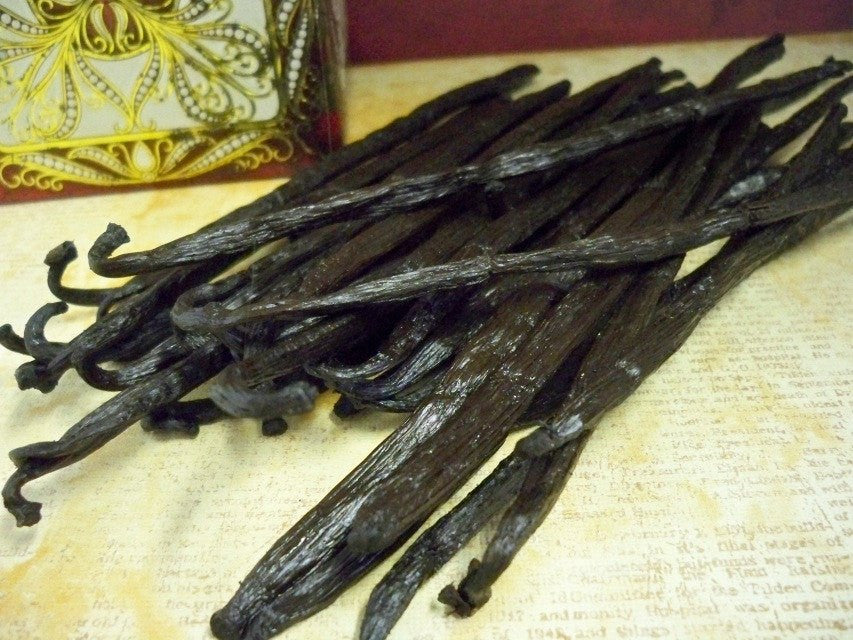
A good vanilla bean is dark brown to black in color, moist, pliable, and fragrant — it should bend without cracking or breaking. A dry, brittle, or pale bean has lost moisture and aromatic compounds. The white crystalline coating sometimes seen on high-quality beans is vanillin — the primary aromatic compound, crystallizing on the surface of the bean — a sign of exceptional quality and high vanillin content.
Vanilla planifolia beans contain an extraordinarily complex aromatic profile — over 250 identified volatile compounds — including vanillin (4-hydroxy-3-methoxybenzaldehyde — the primary aromatic compound, typically 1.5–3% of dry bean weight), p-hydroxybenzaldehyde, p-hydroxybenzoic acid, vanillic acid, p-hydroxybenzyl alcohol, guaiacol, creosol, eugenol, furfural, anisaldehyde, anisyl alcohol, benzaldehyde, benzyl alcohol, diacetyl, linalool, geraniol, coumarin, piperonal (heliotropin), 4-vinylguaiacol, caffeic acid, ferulic acid, glucovanillin (the primary precursor to vanillin in the green pod — converted to vanillin during curing), tannins, calcium, potassium, magnesium, iron, zinc, and manganese.
Product Highlights
- Whole cured seed pods of Vanilla planifolia — Bourbon Vanilla / Madagascar Vanilla
- The only orchid species cultivated commercially for food — the second most expensive spice in the world by weight
- Every vanilla flower outside Mexico is hand-pollinated within hours of opening — one of the most labor-intensive spices in existence
- Madagascar produces approximately 80% of the world’s vanilla supply — centered in the Sava region of northeastern Madagascar
- First cultivated by the Totonac people of Mexico (tlilxochitl — “black flower”) — introduced to Europe by the Spanish in the early 16th century
- Over 250 identified volatile aromatic compounds — one of the most complex natural flavor profiles known
- Primary aromatic compound: vanillin — typically 1.5–3% of dry bean weight
- White crystalline coating on high-quality beans = vanillin crystals — a sign of exceptional quality
How to Use
Vanilla Extract (Make Your Own): Split 2 vanilla beans lengthwise and place in a clean glass jar. Pour ½ cup of vodka or brandy over the beans and seal tightly. Invert gently every day for 4–6 weeks. The extract deepens in flavor over time — top up with more spirit as you use it. Store away from direct sunlight. Vanilla Sugar: Place 1–2 whole or split vanilla beans in a jar of granulated sugar, seal, and leave for 1 week — the sugar absorbs the vanilla aroma beautifully. Use in baking, coffee, and desserts. Baking: Split the bean lengthwise and scrape the seeds (caviar) directly into batters, custards, ice cream bases, and pastry creams. Infusions: Add a whole bean to cream, milk, or simple syrup and heat gently — strain before using. Coffee & Tea: Add a split vanilla bean to your coffee grounds or loose-leaf tea for a naturally vanilla-scented brew.
Sold individually — $5.99 per bean.
Keep in an airtight container away from direct sunlight and extreme temperatures. Do not refrigerate — cold temperatures cause vanilla beans to dry out and lose aroma.
Customer Reviews
I can't believe how fresh these vanilla beans are. The quality is great and I am busy making fresh vanilla extract to replace the store-bought variety.
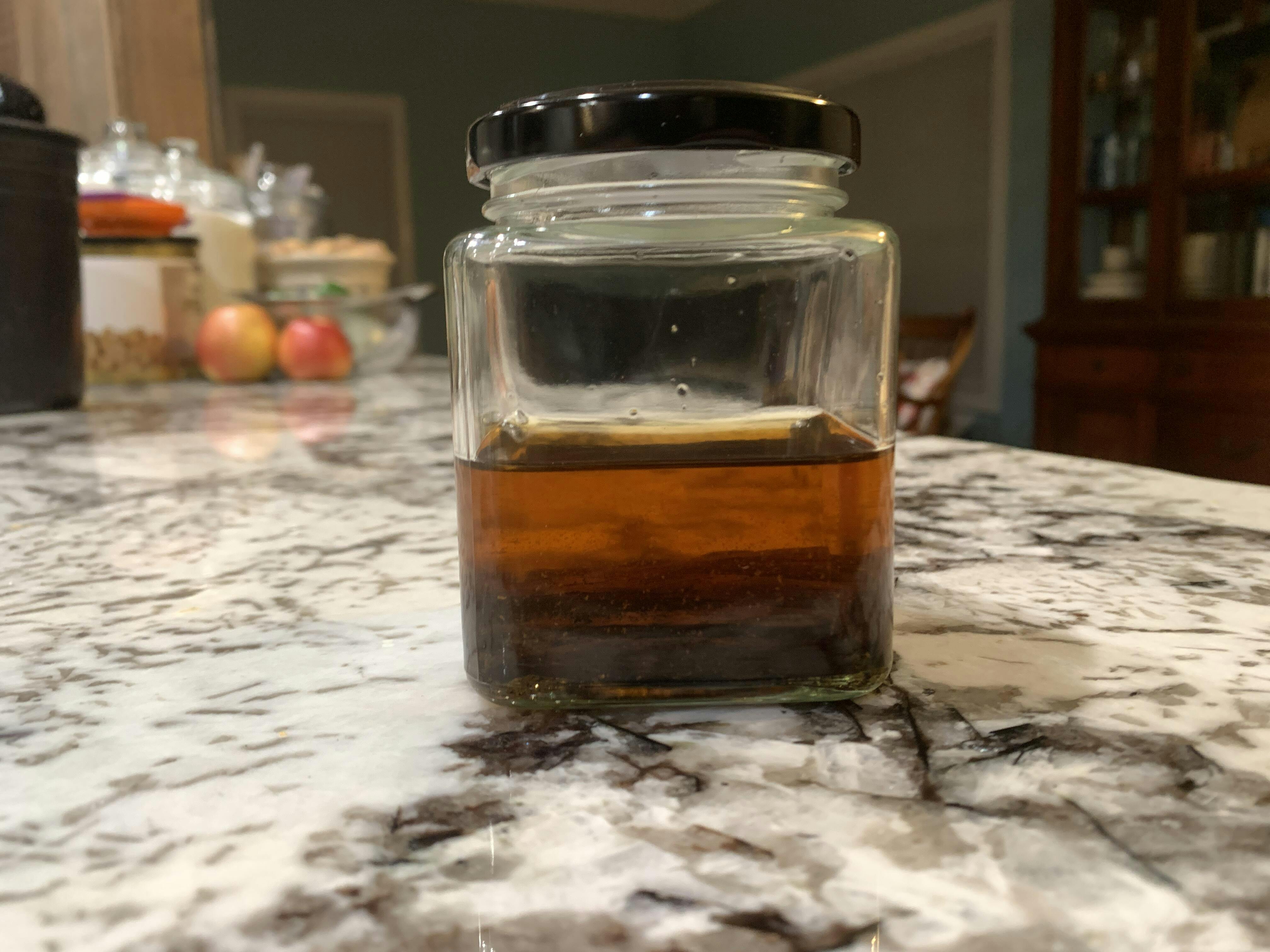
These are honestly the best vanilla beans I’ve ever bought! The ones I got were so fresh and my entire kitchen smelled like vanilla just by opening the package!
Related products