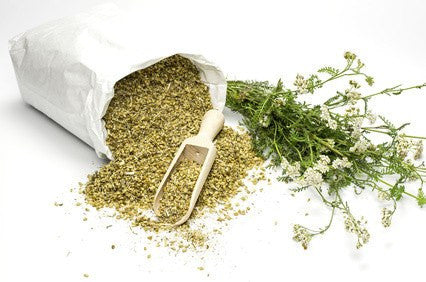
Description
Yarrow Flowers
(Achillea millefolium)
Achillea millefolium — Common Yarrow, Milfoil, Soldier’s Woundwort, or Thousand-Leaf — is one of the most ancient, widely distributed, and botanically well-documented flowering herbs in the world, a hardy perennial of the family Asteraceae native to temperate regions of the Northern Hemisphere across Europe, Asia, and North America, where it grows in meadows, roadsides, fields, and open woodlands from sea level to alpine elevations. Achillea millefolium has been in continuous use as a culinary, aromatic, and botanical herb for at least 60,000 years — yarrow pollen was found among the burial remains at the Shanidar Cave Neanderthal site in Iraq, suggesting its use predates recorded human history. The genus name Achillea commemorates the Greek hero Achilles, who according to legend used yarrow to staunch the wounds of his soldiers on the battlefield — giving rise to the common name “Soldier’s Woundwort” and “Herba militaris.” The species name millefolium — “thousand leaves” in Latin — refers to the finely divided, feathery appearance of the leaves. Yarrow was one of the nine sacred herbs of the Anglo-Saxons, a staple of medieval monastery gardens, and one of the most widely used botanical herbs in Indigenous North American tradition — used by over 60 documented Indigenous nations across the continent. It was gathered from fields and hedgerows by the Greek physician Dioscorides in the first century AD, who documented it in his foundational De Materia Medica. The dried flowers and aerial parts have a pleasantly bitter, slightly spicy, and aromatic flavor — making yarrow one of the most versatile and historically rich herbs in the Western botanical tradition.
Achillea millefolium flowers and aerial parts contain a well-documented phytochemical profile including azulene and chamazulene (formed from matricine during steam distillation — responsible for the characteristic blue color of yarrow essential oil), alpha-bisabolol, beta-pinene, borneol, bornyl acetate, camphor, 1,8-cineole (eucalyptol), sabinene, linalool, terpinen-4-ol, alpha-terpineol, achillin, achillicin, leucodin, millefin (sesquiterpene lactones), flavonoids (including apigenin, luteolin, quercetin, rutin, isorhamnetin, kaempferol, casticin, artemetin, and naringenin), alkaloids (including achilleine and stachydrine), phenolic acids (including caffeic acid, chlorogenic acid, ferulic acid, and salicylic acid), tannins, coumarins (including umbelliferone and herniarin), sterols (including beta-sitosterol), fatty acids, vitamin C, vitamin K, calcium, potassium, magnesium, iron, manganese, and zinc. Available in Cut & Sifted form.
⚠️ Safety Note: Yarrow is a member of the Asteraceae (daisy) family — individuals with known sensitivity to ragweed, chrysanthemums, marigolds, or other Asteraceae plants should use with caution. Not recommended for use during pregnancy. Consult a qualified healthcare provider before use if you are taking any prescription medications.
Product Highlights
- Dried flowers and aerial parts of Achillea millefolium — Common Yarrow / Milfoil / Soldier’s Woundwort
- One of the most ancient botanicals in human history — yarrow pollen found at the Shanidar Cave Neanderthal burial site (c. 60,000 BCE); documented by Dioscorides in De Materia Medica (1st century AD)
- Named for the Greek hero Achilles, who according to legend used yarrow to treat battlefield wounds — giving rise to the common names “Soldier’s Woundwort” and Herba militaris
- One of the nine sacred herbs of the Anglo-Saxons; used by over 60 documented Indigenous North American nations
- Contains chamazulene and azulene — the same blue-pigmented compounds found in German chamomile essential oil, formed during steam distillation
- Rich in flavonoids including apigenin, luteolin, quercetin, rutin, and casticin
- Contains the alkaloid achilleine — a compound unique to the Achillea genus
- Available in Cut & Sifted form (2 oz, 4 oz, 8 oz, 16 oz)
How to Use
Herbal Tea: Steep 1–2 teaspoons of dried yarrow flowers in 8 oz of hot water for 10–15 minutes; strain. The flavor is pleasantly bitter, slightly spicy, and aromatic — pairs well with peppermint, elderflower, and lemon balm. Herbal Blends: A classic ingredient in European and North American herbal tea formulations — pairs well with elderflower, peppermint, linden, and chamomile. Tincture Base: Yarrow is a traditional tincture ingredient; steep in food-grade alcohol per standard tincture ratios. Yarrow Facial Toner: Steep 3 teaspoons of dried yarrow in 1 cup of just-boiled water for 15–20 minutes; strain and cool completely. Add 2 tablespoons of witch hazel distillate. Pour into a spray bottle. Store in the refrigerator for up to 25–30 days. Apply by spraying directly onto the face or onto a cotton pad. Toning Herbal Bath Blend: Combine 2 parts lavender buds, 1 part yarrow flowers, 1 part peppermint, and 1 part thyme. Place in a muslin bath bag and add to a hot bath. Culinary Use: Young yarrow leaves have a pleasantly bitter, slightly peppery flavor and can be used sparingly in salads, herb butters, and as a garnish in the tradition of European wild herb cuisine.
Available in Cut & Sifted (2 oz, 4 oz, 8 oz, 16 oz).
Keep out of reach of children. Not recommended during pregnancy. Use with caution if sensitive to plants in the Asteraceae (daisy) family. Consult a qualified healthcare provider before use if taking prescription medications. Store in a cool, dry place away from direct sunlight.
These statements have not been evaluated by the Food and Drug Administration. This product is not intended to diagnose, treat, cure, or prevent any disease.
Related products