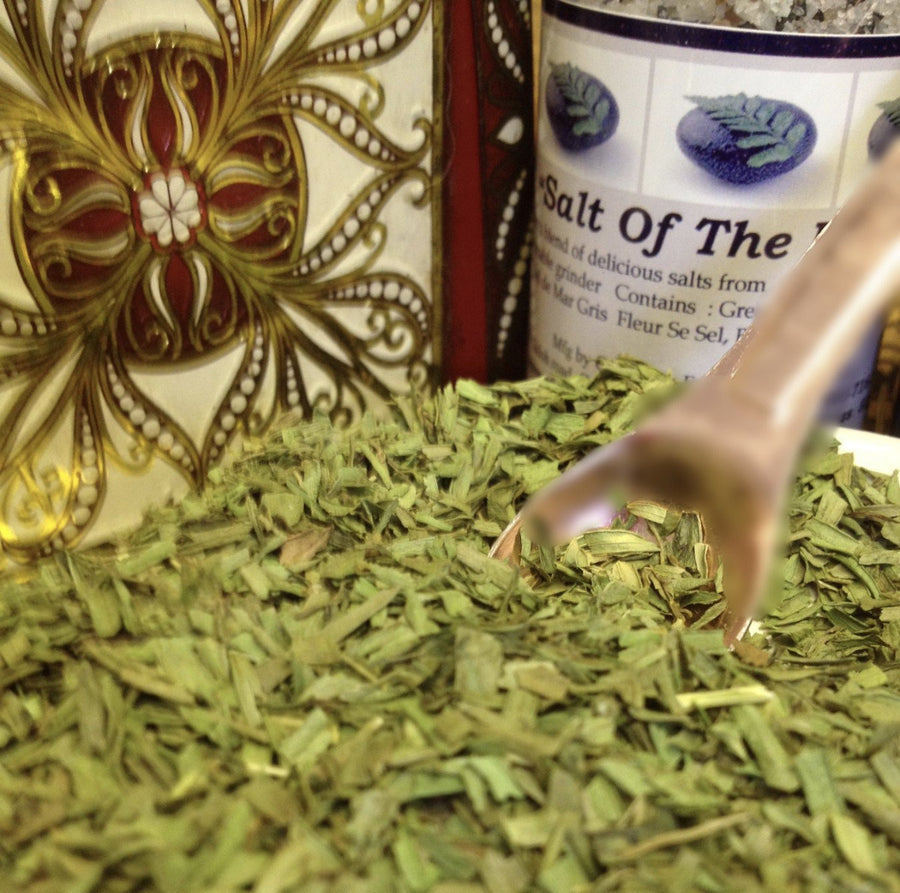
Description
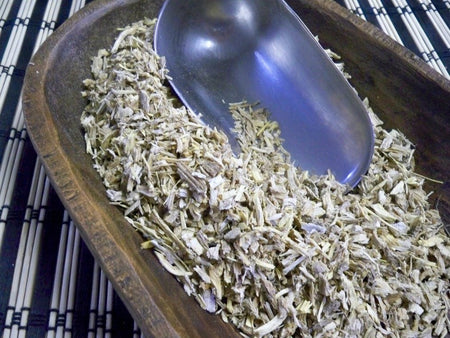
Tarragon Leaf, Cut & Sifted
(Artemisia dracunculus)
Artemisia dracunculus — Tarragon, French Tarragon, or Estragon — is one of the most prized and distinctive culinary herbs in the world, a slender, rhizomatous perennial of the family Asteraceae native to central Asia and Siberia, cultivated throughout Europe, North America, and beyond. Tarragon is one of the four classic fines herbes of French cuisine — alongside chervil, chives, and parsley — and it is considered one of the defining flavors of the French culinary tradition, essential to béarnaise sauce, sauce gribiche, poulet à l’estragon, and countless other classic preparations. The botanical name dracunculus is the Latin diminutive of draco (dragon) — “little dragon” — a name that reflects two competing theories: one holds that the plant’s coiling, serpentine roots resemble a dragon; another invokes the ancient Doctrine of Signatures, suggesting the plant was used to treat the bites of venomous creatures. The French common name estragon (from the Arabic tarkhun — طرخون) traces the herb’s journey from central Asia through the Arab world to medieval Europe, where it was introduced by the Moors and became one of the most important culinary herbs of the French kitchen.
Tarragon leaf contains a distinctive phytochemical profile including estragole (methyl chavicol — the primary volatile compound, typically 60–75% of the essential oil, responsible for tarragon’s characteristic anise-like aroma), ocimene, terpinolene, alpha-pinene, beta-pinene, limonene, sabinene, linalool, methyl eugenol, coumarin, herniarin (7-methoxycoumarin), scopoletin, flavonoids (including quercetin, kaempferol, patuletin, spinacetin, isorhamnetin, and rutin), phenolic acids (caffeic acid, chlorogenic acid, rosmarinic acid), tannins, vitamin C, vitamin A (beta-carotene), vitamin B6, folate, calcium, iron, magnesium, potassium, manganese, and zinc. Available in Cut & Sifted form.
Product Highlights
- Cut & sifted leaf of Artemisia dracunculus — Tarragon / French Tarragon / Estragon
- One of the four classic fines herbes of French cuisine — alongside chervil, chives, and parsley
- The name dracunculus means “little dragon” in Latin — a reference to the plant’s serpentine roots
- The French name estragon traces to the Arabic tarkhun (طرخون) — introduced to Europe by the Moors
- Primary aromatic compound: estragole (methyl chavicol — 60–75% of essential oil) — responsible for tarragon’s distinctive anise-like flavor
- Essential to classic French preparations: béarnaise sauce, sauce gribiche, poulet à l’estragon, and fines herbes blends
- Rich in flavonoids — quercetin, kaempferol, patuletin, and rutin
- Available in Cut & Sifted form
How to Use
Béarnaise Sauce: The essential herb — steep tarragon in white wine vinegar with shallots as the base for classic béarnaise. Chicken: Poulet à l’estragon — rub chicken with tarragon and butter before roasting, or simmer in a cream and tarragon sauce. Fish: A natural pairing with salmon, sole, and other delicate fish — add to butter sauces or use in a court-bouillon. Eggs: Tarragon is exceptional with eggs — add to omelets, scrambled eggs, and egg salad. Vinegar: Steep dried tarragon in white wine vinegar for 2 weeks for classic tarragon vinegar — a French pantry staple. Salad Dressings: Whisk into vinaigrettes with Dijon mustard and white wine vinegar. Fines Herbes: Combine with dried chervil, chives, and parsley in equal parts for the classic French fines herbes blend. Add Late: Tarragon’s delicate volatile oils dissipate quickly with heat — add at the end of cooking or use as a finishing herb for maximum flavor.
Available in Cut & Sifted (2 oz, 4 oz, 8 oz, 16 oz).
Keep out of reach of children. Store in a cool, dry place away from direct sunlight.
Related products