Description
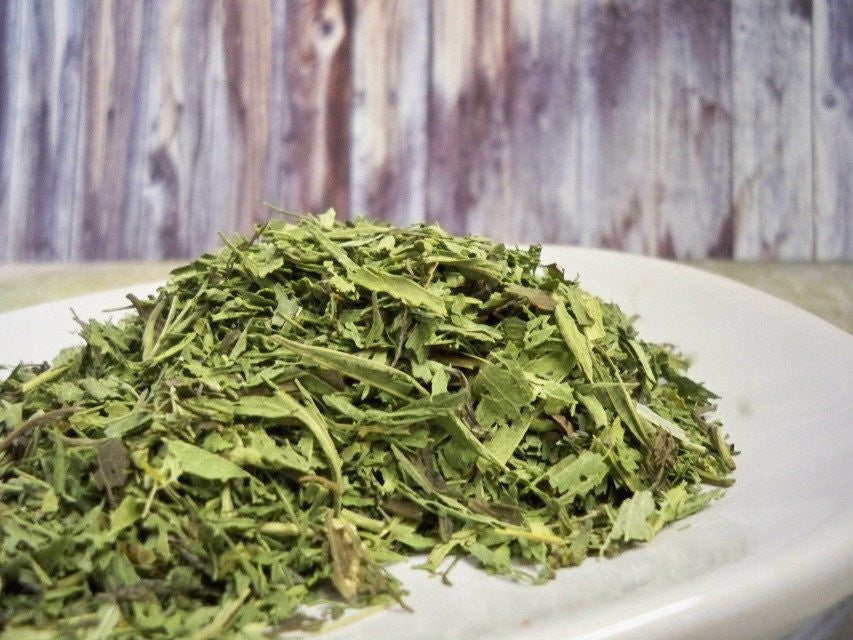
Stevia Leaf, Cut & Sifted
(Stevia rebaudiana)
Stevia rebaudiana — Stevia, Sweet Leaf, or Candy Leaf — is a small, herbaceous perennial shrub of the family Asteraceae native to the subtropical highlands of Paraguay and Brazil, where it grows in the sandy, acidic soils of the Amambay and Iguazú regions of northeastern Paraguay at elevations of 200–600 meters. Stevia rebaudiana is one of the most extraordinary plants in the botanical world — its leaves contain a group of intensely sweet diterpene glycosides that are approximately 200–350 times sweeter than sucrose (table sugar) by weight, yet contain virtually no calories and are not metabolized by the human body in the same way as sugar. The Guaraní people of Paraguay and Brazil — the Indigenous peoples of the region where stevia grows wild — have used the leaves of Stevia rebaudiana (which they call ka’a he’ê — “sweet herb” in Guaraní) as a sweetener and botanical for centuries, adding the leaves to bitter yerba maté tea and using them in traditional botanical practice. The plant was first described to Western science by the Swiss botanist Moisés Santiago Bertoni in 1899, who documented its extraordinary sweetness after receiving samples from Paraguayan settlers. Despite its extraordinary properties, stevia remained largely unknown outside South America until the late 20th century — Japan pioneered its commercial development in the 1970s, and stevia extracts received GRAS (Generally Recognized as Safe) status from the FDA in 2008, after which stevia rapidly became one of the most widely used natural sweeteners in the world. Our Stevia Leaf, Cut & Sifted is the whole dried leaf — the most traditional and minimally processed form of stevia, retaining the full spectrum of the plant’s naturally occurring compounds.
The extraordinary sweetness of stevia leaves is due to a family of steviol glycosides — diterpene glycosides in which a steviol backbone is linked to glucose and rhamnose sugar units. The primary steviol glycosides include stevioside (the most abundant — typically 5–10% of dry leaf weight, approximately 250–300 times sweeter than sucrose), rebaudioside A (Reb A — the second most abundant and the sweetest and cleanest-tasting glycoside — approximately 350–450 times sweeter than sucrose, the primary compound in commercial stevia extracts), rebaudioside B, rebaudioside C (dulcoside B), rebaudioside D, rebaudioside E, rebaudioside F, dulcoside A, rubusoside, and steviolbioside; along with flavonoids (including quercetin, kaempferol, apigenin, luteolin, isoquercitrin, and rutin), chlorogenic acid, caffeic acid, austroinulin (a fructooligosaccharide), beta-sitosterol, stigmasterol, chlorophyll, carotenoids, vitamin C, calcium, magnesium, potassium, iron, zinc, and phosphorus. Available in Cut & Sifted form.
Product Highlights
- Cut & sifted dried leaf of Stevia rebaudiana — Stevia / Sweet Leaf / Ka’a he’ê (Guaraní: “sweet herb”)
- Native to the subtropical highlands of Paraguay and Brazil — used by the Guaraní people for centuries as a natural sweetener in yerba maté and traditional botanical practice
- First described to Western science by Swiss botanist Moisés Santiago Bertoni in 1899
- Leaves contain steviol glycosides — approximately 200–350 times sweeter than sucrose by weight, with virtually no calories
- Primary sweetening compounds: stevioside (5–10% of dry leaf) and rebaudioside A — the same compounds used in commercial stevia products, in their whole-leaf, minimally processed form
- FDA GRAS (Generally Recognized as Safe) status granted in 2008 — now one of the most widely used natural sweeteners in the world
- Rich in flavonoids — quercetin, kaempferol, apigenin, luteolin, and rutin
- Available in Cut & Sifted form — the most traditional and minimally processed form of stevia
How to Use
Sweetening Tea & Coffee: Add 1–3 leaves (or ¼–½ teaspoon of cut & sifted leaf) directly to hot tea or coffee and steep for 3–5 minutes — the leaves release their sweetness into the liquid. Start with a small amount and adjust to taste; the sweetness is intense. Herbal Tea Blends: Add a small amount to bitter herbal teas (yerba maté, green tea, dandelion, or chamomile) in the traditional Guaraní manner. Infusions: Steep in warm water to make a stevia liquid extract for use in recipes. Smoothies: Blend a few leaves directly into smoothies as a calorie-free sweetener. Baking: Note that whole leaf stevia has a characteristic green color and a slight licorice-like aftertaste — it works best in strongly flavored preparations. Powder: Grind cut & sifted leaf in a spice grinder for a fine stevia leaf powder.
Available in Cut & Sifted (2 oz, 4 oz, 8 oz, 16 oz).
Keep out of reach of children. Store in a cool, dry place away from direct sunlight.
Related products