Description
St. John’s Wort Herb
(Hypericum perforatum)
Hypericum perforatum — St. John’s Wort — is one of the most historically significant, botanically distinctive, and extensively studied medicinal plants in the world, a perennial herb of the family Hypericaceae native to Europe, western Asia, and northern Africa, now naturalized throughout North America, Australia, and much of the temperate world, where it grows in meadows, roadsides, disturbed soils, and open woodlands. Hypericum perforatum has been used in European botanical medicine for over 2,400 years — it was described by the ancient Greek physicians Hippocrates, Dioscorides, and Galen, and it has been one of the most important herbs in European folk medicine, monastic medicine, and formal botanical practice from antiquity through the present day. The common name “St. John’s Wort” refers to the plant’s traditional flowering time around the feast day of St. John the Baptist (June 24th) in the Christian calendar — the plant was traditionally gathered on St. John’s Eve (Midsummer’s Eve) and hung over doorways and windows to ward off evil spirits, a practice that blended pre-Christian midsummer traditions with Christian observance. The genus name Hypericum derives from the Greek hyper (above) and eikon (image or icon) — a reference to the ancient practice of placing the plant above religious icons to ward off evil. The species name perforatum (perforated) refers to the plant’s most distinctive botanical feature — the leaves of Hypericum perforatum are covered with tiny translucent oil glands that appear as perforations when held up to the light, giving the leaves a characteristic “perforated” appearance that makes the plant immediately identifiable. When the bright yellow flowers or buds are crushed between the fingers, they release a striking blood-red pigment — hypericin — one of the most visually dramatic phytochemicals in the plant kingdom, and the compound that gives St. John’s Wort oil its characteristic deep red color.
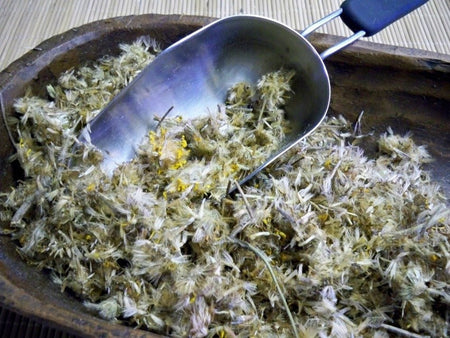
Hypericum perforatum contains one of the most well-characterized and complex phytochemical profiles of any botanical, including hypericin and pseudohypericin (naphthodianthrone pigments — the red compounds responsible for the plant’s characteristic color and among the most studied phytochemicals in botanical medicine), hyperforin and adhyperforin (phloroglucinol derivatives — the primary lipophilic compounds and major quality markers), flavonoids (including hyperoside, rutin, quercetin, isoquercitrin, quercitrin, amentoflavone, biapigenin, luteolin, kaempferol, and myricetin — comprising approximately 2–4% of the dry herb), xanthones (including kielcorin and norathyriol), phenolic acids (caffeic acid, chlorogenic acid, 3-O-coumaroylquinic acid), tannins (catechins and proanthocyanidins — approximately 3–16%), volatile oils (including alpha-pinene, beta-pinene, myrcene, limonene, caryophyllene, and 2-methyloctane), melatonin, pectin, resin, carotenoids, and vitamin C. Available in Cut & Sifted and Powder forms.
Product Highlights
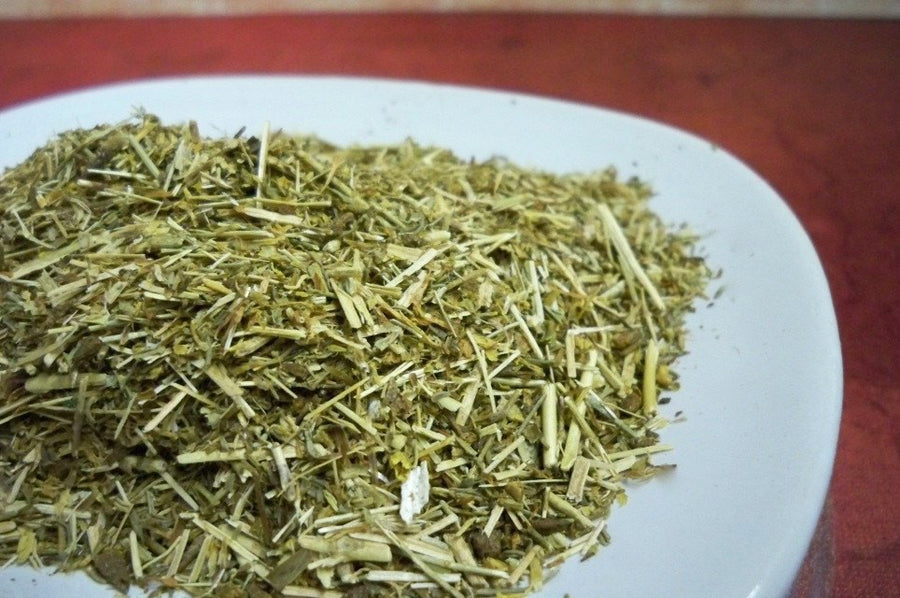
- Cut & sifted herb and powder of Hypericum perforatum — St. John’s Wort
- One of the most historically significant botanicals in European medicine — described by Hippocrates, Dioscorides, and Galen; used continuously for over 2,400 years
- Named for St. John the Baptist — traditionally gathered on Midsummer’s Eve (June 24th) and hung over doorways to ward off evil spirits
- The species name perforatum — “perforated” — refers to the translucent oil glands on the leaves that appear as tiny holes when held to the light
- Crushing the flowers releases hypericin — a striking blood-red naphthodianthrone pigment, one of the most visually dramatic phytochemicals in the plant kingdom
- One of the most extensively studied botanicals in the world — primary bioactive compounds: hypericin, pseudohypericin, and hyperforin
- Exceptionally rich in flavonoids — hyperoside, rutin, quercetin, isoquercitrin, amentoflavone, and biapigenin
- Available in Cut & Sifted and Powder forms
How to Use
Herbal Tea (Infusion): Steep 1–2 teaspoons of cut & sifted St. John’s Wort in 8 oz of hot water for 10 minutes; strain. The flavor is mildly bitter and slightly astringent with a faint floral note. St. John’s Wort Oil (Traditional): Pack fresh or dried flowers into a glass jar, cover completely with olive oil, and infuse in a sunny window for 4–6 weeks — the oil will turn a deep, striking red from the hypericin. Strain and store in a dark bottle. Tincture: Use in alcohol-based tincture preparations — an effective extraction method for both the hydrophilic and lipophilic constituents. Herbal Blends: Combines with lemon balm, passionflower, and oat straw in traditional nervine herbal tea blends. Powder: Encapsulate or blend into herbal formulas.
Available in Cut & Sifted and Powder (2 oz, 4 oz, 8 oz, 16 oz).
These statements have not been evaluated by the Food and Drug Administration. This product is not intended to diagnose, treat, cure, or prevent any disease. Consult your healthcare provider before use if you are pregnant, nursing, taking medications, or have a medical condition. Important: St. John’s Wort is known to interact with numerous medications — including antidepressants, birth control pills, blood thinners (warfarin), HIV medications, cyclosporine, digoxin, and many others — by inducing cytochrome P450 enzymes and P-glycoprotein. Do not use alongside prescription medications without medical supervision. St. John’s Wort may cause photosensitivity (increased sensitivity to sunlight) — avoid prolonged sun exposure during use. Keep out of reach of children.
Related products