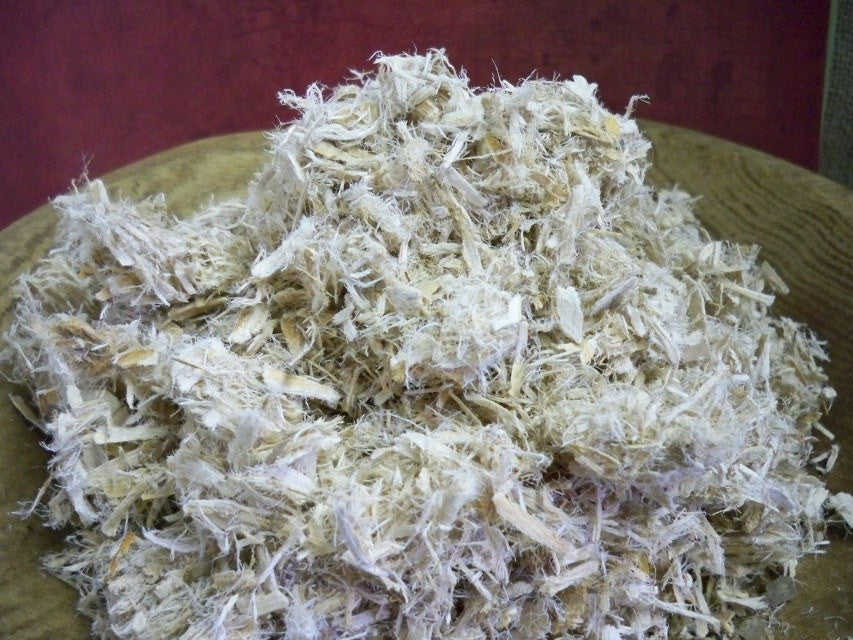
Description
Slippery Elm Bark
(Ulmus rubra)
Ulmus rubra — Slippery Elm, Red Elm, or Moose Elm — is a medium-sized deciduous tree of the family Ulmaceae native to eastern North America, found in moist, rich woodlands, river bottoms, and hillsides from Quebec and Ontario south to Florida and west to the Great Plains. Ulmus rubra is closely related to the American Elm (Ulmus americana) but is distinguished by its rough, sandpaper-like leaves and, most importantly, by the extraordinary properties of its inner bark — the mucilaginous inner bark (phloem) of slippery elm is one of the most remarkable botanical materials in North American natural history, producing a thick, slippery, gel-like mucilage when moistened that gives the tree its common name and has made it one of the most important and widely used botanicals in Indigenous North American and early American botanical medicine. The inner bark of slippery elm was one of the most important survival foods and botanical medicines of the Indigenous peoples of eastern North America — used by the Cherokee, Iroquois, Ojibwe, Menominee, and many other nations as a food, a medicine, and a survival ration. During the American Revolutionary War, slippery elm bark porridge was used to feed George Washington’s troops at Valley Forge when food supplies were critically low — one of the most remarkable chapters in the plant’s extraordinary history. Slippery elm inner bark was listed in the United States Pharmacopeia from 1820 to 1936 and remains an FDA-approved demulcent ingredient for sore throat lozenges.
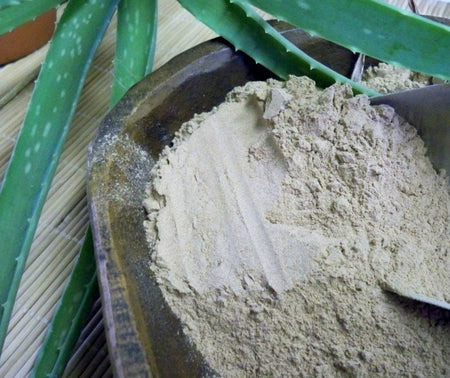
The extraordinary properties of slippery elm bark are due to its exceptionally high content of mucilage — a complex mixture of polysaccharides that forms a thick, viscous gel when hydrated. The primary mucilaginous polysaccharides include hexose, pentose, methylpentose sugars, and polyuronides (including galacturonic acid and galactose-rich polysaccharides); along with starch (a significant component — slippery elm bark is genuinely nutritious and calorie-dense), tannins (catechins and proanthocyanidins), phytosterols (beta-sitosterol, campesterol), sesquiterpenes, calcium oxalate, capric acid, oleic acid, palmitic acid, beta-carotene, vitamin C, calcium, magnesium, potassium, iron, phosphorus, zinc, selenium, and manganese. Available in Powdered Inner Bark and Cut & Sifted forms.
Product Highlights
- Powdered inner bark and cut & sifted bark of Ulmus rubra — Slippery Elm / Red Elm
- One of the most important botanical demulcents in North American herbal tradition — used by the Cherokee, Iroquois, Ojibwe, Menominee, and many other Indigenous nations
- Used to feed George Washington’s troops at Valley Forge during the American Revolutionary War — one of the most remarkable chapters in botanical history
- Listed in the United States Pharmacopeia from 1820 to 1936 — an FDA-approved demulcent ingredient for sore throat preparations
- The inner bark produces an extraordinary mucilaginous gel when hydrated — one of the most effective botanical demulcents known
- Genuinely nutritious — high in starch, polysaccharides, calcium, magnesium, and potassium; historically used as a survival food
- Available in Powdered Inner Bark and Cut & Sifted forms
How to Use
Gruel / Porridge (Traditional): Mix 1–2 tablespoons of slippery elm powder with enough cold water to form a paste, then stir in 8 oz of hot water or warm milk; sweeten with honey and add cinnamon or ginger to taste. This traditional preparation — known as slippery elm gruel — is one of the most nourishing and soothing botanical foods known. Herbal Tea: Whisk 1 teaspoon of powder into 8 oz of hot water; stir well as the mucilage thickens quickly. Lozenges: Combine powder with honey and a small amount of water; roll into balls and allow to dry for traditional throat lozenges. Encapsulation: Fill capsules with powder for convenient use. Herbal Blends: A classic component of the traditional Essiac formula alongside sheep sorrel, burdock root, and Indian rhubarb root. Poultice: Mix powder with water to form a thick paste for external use on the skin.
Available in Powdered Inner Bark and Cut & Sifted (2 oz, 4 oz, 8 oz, 16 oz).
These statements have not been evaluated by the Food and Drug Administration. This product is not intended to diagnose, treat, cure, or prevent any disease. Consult your healthcare provider before use if you are pregnant, nursing, taking medications (note: the mucilage may slow absorption of oral medications — take separately), or have a medical condition. Keep out of reach of children.