Description
Sheep Sorrel Herb
(Rumex acetosella)
Rumex acetosella — Sheep Sorrel, Field Sorrel, or Red Sorrel — is a slender, rhizomatous perennial herb of the family Polygonaceae (the buckwheat family) native to Europe and Asia, now naturalized throughout North America, Australia, and much of the world, where it grows in disturbed soils, meadows, roadsides, and acidic grasslands — one of the most widely distributed and ecologically adaptable plants on earth. Despite its reputation as a persistent garden weed, sheep sorrel has a long and distinguished history of use in European, Indigenous North American, and traditional botanical practice, and it is one of the most nutritionally rich of all wild edible plants — with a sharp, intensely sour, lemon-like flavor caused by its exceptionally high content of oxalic acid and vitamin C. The genus name Rumex is the ancient Latin name for sorrel and dock; the species name acetosella derives from the Latin acetum (vinegar) — a reference to the plant’s characteristic sharp, acidic taste. Sheep sorrel is closely related to the larger garden sorrel (Rumex acetosa) and to the dock plants (Rumex spp.), all members of the same genus. In North America, sheep sorrel is perhaps best known as one of the four botanical ingredients in the traditional herbal formula Essiac — developed by Canadian nurse Rene Caisse in the 1920s based on a formula she attributed to an Ojibwe healer, alongside burdock root, slippery elm bark, and Indian rhubarb root.
Sheep sorrel herb contains a distinctive phytochemical profile including oxalic acid (the primary organic acid — responsible for the characteristic sour flavor and the plant’s sharp taste; present in significant quantities), vitamin C (ascorbic acid — exceptionally high, one of the richest wild plant sources), vitamin A (beta-carotene), vitamin E (tocopherols), vitamin K, chlorophyll, anthraquinones (including emodin, chrysophanol, and physcion — shared with other Rumex species), flavonoids (including quercetin, kaempferol, vitexin, isovitexin, hyperoside, and rutin), phenolic acids (caffeic acid, ferulic acid, protocatechuic acid), tannins, polysaccharides, potassium (exceptionally high), calcium, magnesium, iron, phosphorus, silicon, sodium, sulfur, and zinc. Available in Cut & Sifted and Powder forms.
Product Highlights
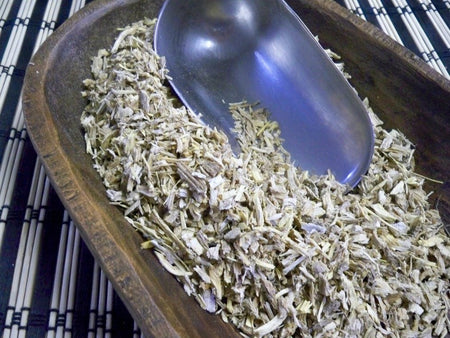
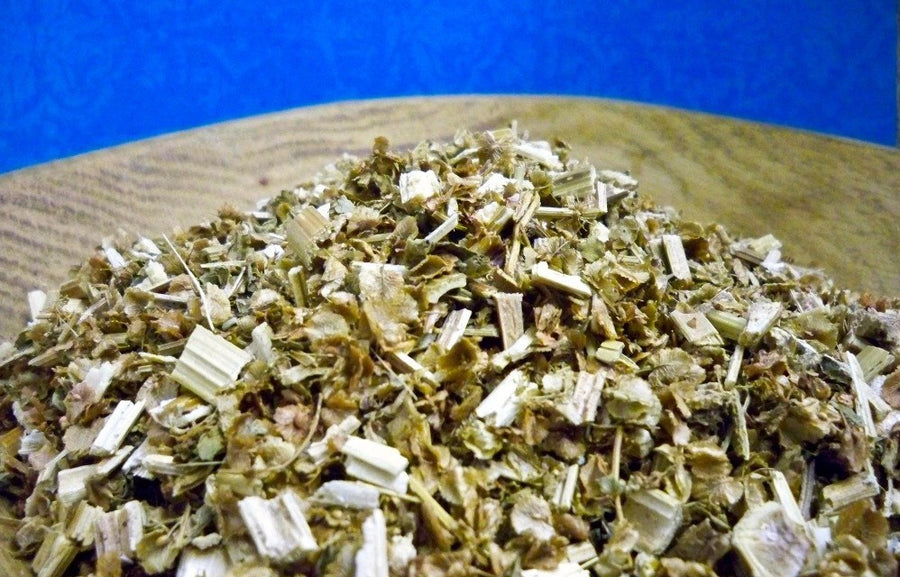
- Cut & sifted herb and powder of Rumex acetosella — Sheep Sorrel / Field Sorrel / Red Sorrel
- Family Polygonaceae (the buckwheat family) — closely related to garden sorrel (Rumex acetosa) and dock (Rumex spp.)
- Native to Europe and Asia — now one of the most widely distributed plants on earth, naturalized across North America, Australia, and beyond
- One of the most nutritionally rich wild edible plants — exceptionally high in vitamin C, vitamin A, potassium, and chlorophyll
- Characteristic sharp, intensely sour, lemon-like flavor from oxalic acid — the species name acetosella means “little vinegar” in Latin
- One of the four botanical ingredients in the traditional Essiac herbal formula — alongside burdock root, slippery elm bark, and Indian rhubarb root
- Rich in flavonoids — quercetin, kaempferol, vitexin, hyperoside, and rutin
- Available in Cut & Sifted and Powder forms
How to Use
Herbal Tea (Infusion): Steep 1–2 teaspoons of cut & sifted sheep sorrel in 8 oz of hot water for 10 minutes; strain. The flavor is sharply sour and lemony — pleasant in small amounts. Culinary: Fresh sheep sorrel leaves are edible and used in salads, soups, and sauces in European culinary traditions — the sharp, acidic flavor pairs well with fish, eggs, and cream-based dishes. Essiac Formula: Combine with burdock root, slippery elm bark, and Indian rhubarb root in the traditional Essiac herbal formula proportions. Herbal Blends: Pairs well with nettle leaf, red clover, and burdock root in traditional herbal tea blends. Powder: Encapsulate or blend into herbal formulas.
Available in Cut & Sifted and Powder (2 oz, 4 oz, 8 oz, 16 oz).
These statements have not been evaluated by the Food and Drug Administration. This product is not intended to diagnose, treat, cure, or prevent any disease. Consult your healthcare provider before use if you are pregnant, nursing, taking medications, or have a medical condition. Important: sheep sorrel contains significant amounts of oxalic acid — individuals with kidney stones, kidney disease, gout, or rheumatoid arthritis should use with caution or avoid. Not recommended in large amounts during pregnancy. Keep out of reach of children.