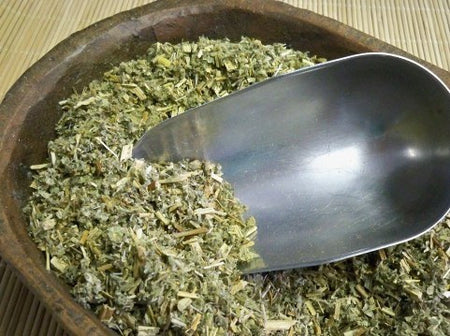
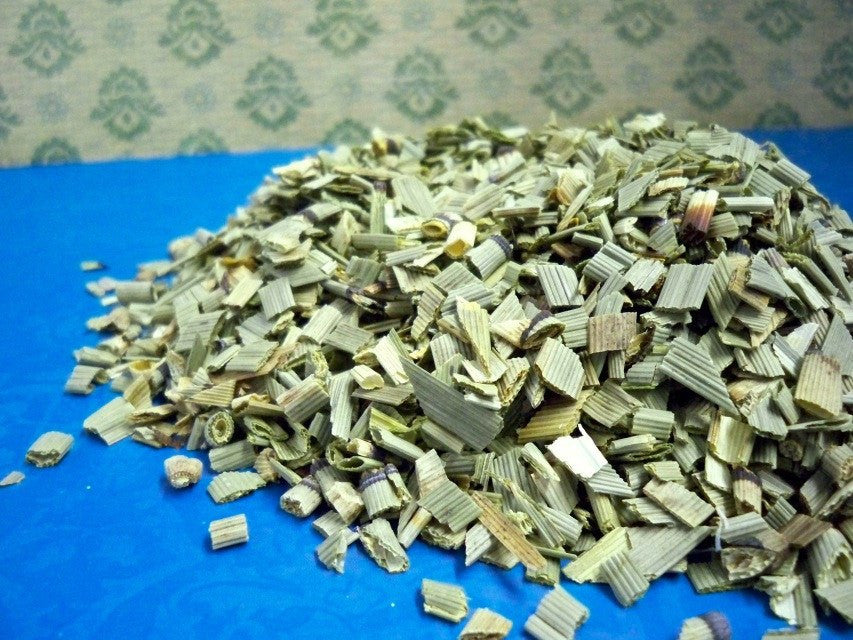
Description
Shavegrass Herb — Horsetail
(Equisetum arvense)
Equisetum arvense — Horsetail, Shavegrass, Field Horsetail, or Scouring Rush — is one of the most ancient and botanically extraordinary plants on earth, a primitive, spore-bearing perennial herb of the family Equisetaceae native to the temperate regions of the Northern Hemisphere, found across North America, Europe, Asia, and northern Africa in moist meadows, roadsides, riverbanks, and disturbed soils. The genus Equisetum is the sole surviving genus of the ancient plant division Equisetophyta — a lineage that dominated the forests of the Carboniferous period approximately 350 million years ago, when tree-sized horsetails (Calamites spp.) up to 30 meters tall formed vast swamp forests that are now preserved as coal deposits. Today’s Equisetum arvense is a diminutive descendant of these ancient giants — typically reaching only 20–80 cm in height — but it retains the same fundamental architecture that has remained essentially unchanged for 350 million years, making horsetail one of the oldest surviving plant lineages on earth and a true living fossil. The common name “Shavegrass” refers to the plant’s extraordinarily high silica content — the stems were historically used as a natural abrasive for scouring pots, polishing metal, and smoothing wood, and were traded commercially in Europe for this purpose well into the 19th century. Horsetail has been used in European, Chinese, and Indigenous North American botanical traditions for centuries.
Equisetum arvense is defined by one of the most extraordinary mineral profiles of any plant — it contains the highest concentration of silica (silicon dioxide — SiO₂) of any known plant, comprising up to 25% of the dry weight of the aerial stems, present primarily as monosilicic acid and silica gel within the plant’s epidermal cells. This exceptional silica content is accompanied by potassium (one of the highest plant sources), calcium, magnesium, manganese, iron, aluminum, phosphorus, sulfur, sodium, zinc, copper, and selenium; along with flavonoids (including isoquercitrin, quercetin, kaempferol, luteolin, apigenin, genkwanin, naringenin, and protoapigenin), phenolic acids (caffeic acid, ferulic acid, gallic acid, protocatechuic acid), alkaloids (including palustrine, palustrinine, nicotine — in trace amounts), phytosterols (beta-sitosterol, campesterol), saponins (equisetonin), tannins, aconitic acid, malic acid, oxalic acid, equisetolic acid, thiaminase (an enzyme that degrades thiamin — important safety note; see below), and chlorophyll. Available in Cut & Sifted and Powder forms.
Product Highlights
- Cut & sifted herb and powder of Equisetum arvense — Horsetail / Shavegrass / Field Horsetail
- A living fossil — the sole surviving genus of the ancient Equisetophyta, a plant lineage 350 million years old
- Tree-sized ancestors (Calamites spp.) up to 30 meters tall dominated the Carboniferous forests — now preserved as coal deposits
- The highest silica (SiO₂) content of any known plant — up to 25% of dry weight — the source of the common name “Shavegrass” (historically used to scour and polish)
- Exceptionally rich in potassium, calcium, magnesium, and a broad spectrum of trace minerals
- Rich in flavonoids — isoquercitrin, quercetin, kaempferol, luteolin, and apigenin
- Used in European, Chinese, and Indigenous North American botanical traditions for centuries
- Available in Cut & Sifted and Powder forms
How to Use
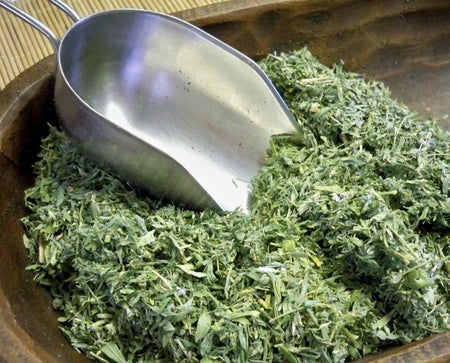
Herbal Tea (Infusion): Steep 1–2 teaspoons of cut & sifted shavegrass in 8 oz of hot water for 10–15 minutes; strain. The flavor is mild, slightly grassy, and mineral. Decoction: Simmer for 15–20 minutes for a stronger extraction. Powder: Encapsulate or blend into herbal formulas. Herbal Blends: Combines well with nettle leaf, oat straw, and alfalfa in mineral-rich herbal tea blends.
Available in Cut & Sifted and Powder (2 oz, 4 oz, 8 oz, 16 oz).
These statements have not been evaluated by the Food and Drug Administration. This product is not intended to diagnose, treat, cure, or prevent any disease. Consult your healthcare provider before use if you are pregnant, nursing, taking medications (particularly diuretics or thiamin/B1 supplements), or have a medical condition. Important: horsetail contains thiaminase, an enzyme that can deplete vitamin B1 (thiamin) with prolonged use — do not use continuously for extended periods without medical supervision. Not recommended during pregnancy. Keep out of reach of children.
Related products