

Description
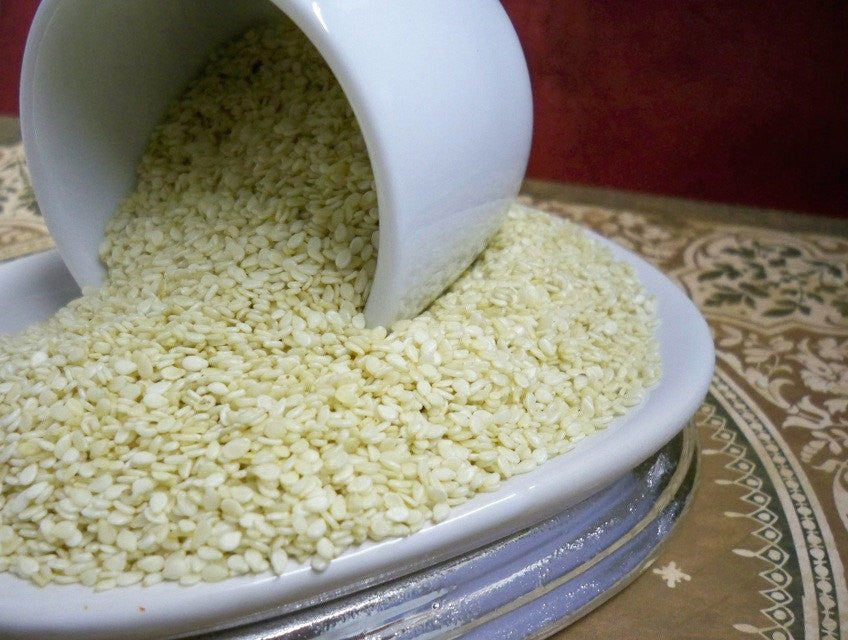
Sesame Seed — White & Black
(Sesamum indicum)
Sesamum indicum — Sesame — is the oldest oilseed crop in human history, a flowering annual plant of the family Pedaliaceae native to sub-Saharan Africa and the Indian subcontinent, cultivated for its extraordinarily oil-rich seeds for at least 5,500 years — with archaeological evidence of sesame cultivation in the Harappan civilization of the Indus Valley dating to 3500 BC, and evidence of sesame oil production in Mesopotamia dating to at least 3000 BC. Sesame was one of the most important and widely traded agricultural commodities of the ancient world — traded across the ancient Near East, Egypt, Greece, Rome, and China — and it remains one of the most important oilseed crops in the world today, cultivated across tropical and subtropical regions from India and China to Africa, the Middle East, and the Americas. The phrase “Open Sesame!” from the One Thousand and One Nights is a direct reference to the sesame pod — which bursts open with a distinctive pop when ripe, scattering its seeds — a sound so characteristic that it became embedded in one of the most famous phrases in world literature. Sesame seeds come in a wide range of colors — white (hulled or unhulled), black, brown, red, and gold — with white sesame and black sesame being the two most widely used varieties in culinary traditions worldwide.
White Sesame (Sesamum indicum — hulled) has a mild, delicate, nutty flavor and a clean ivory color — the most widely used variety in Western, Middle Eastern, and East Asian cooking. Black Sesame (Sesamum indicum — unhulled, black variety) has a deeper, more robust, slightly earthier and more bitter flavor with a striking jet-black color — prized for centuries in Chinese, Japanese, Korean, and South Asian culinary and botanical traditions, where it is considered one of the most important tonic foods.
Sesame seeds are one of the most nutritionally dense seeds known — exceptionally rich in sesame oil (approximately 50–55% oil content — one of the highest of any seed), composed primarily of oleic acid (omega-9 monounsaturated fatty acid — approximately 35–50%), linoleic acid (omega-6 polyunsaturated fatty acid — approximately 35–50%), palmitic acid, and stearic acid; along with sesamin and sesamolin (lignans unique to sesame — the primary antioxidant compounds), sesamol (a phenolic antioxidant formed from sesamolin during processing), gamma-tocopherol (vitamin E), phytosterols (beta-sitosterol, campesterol, stigmasterol), protein (approximately 17–20% — a complete protein containing all essential amino acids), dietary fiber, calcium (exceptionally high — one of the richest plant sources, particularly in unhulled seeds), magnesium, iron, zinc, phosphorus, manganese, copper, thiamin (B1), riboflavin (B2), niacin (B3), pyridoxine (B6), and folate. Black sesame seeds retain their hull and contain higher levels of calcium, fiber, and antioxidant lignans than hulled white sesame. Available in White (Hulled) and Black (Unhulled) varieties.
Product Highlights
- White (hulled) and Black (unhulled) seeds of Sesamum indicum — the oldest oilseed crop in human history
- Archaeological evidence of cultivation dating to 3500 BC in the Indus Valley — one of the most ancient cultivated plants known
- One of the most important agricultural commodities of the ancient world — traded across Mesopotamia, Egypt, Greece, Rome, and China
- The origin of “Open Sesame!” — the sesame pod bursts open with a distinctive pop when ripe, one of the most recognizable sounds in ancient agriculture
- Approximately 50–55% oil content — one of the highest of any seed; rich in oleic and linoleic fatty acids
- Exceptionally rich in sesamin and sesamolin — lignans unique to sesame and among the most studied antioxidant compounds in the plant kingdom
- Black sesame retains its hull — higher in calcium, fiber, and antioxidant lignans than hulled white sesame; deeper, earthier flavor
- Available in White (Hulled) and Black (Unhulled) varieties
How to Use
Toasting: Toast in a dry skillet over medium heat, stirring constantly, for 2–3 minutes until golden and fragrant — toasting dramatically intensifies the nutty flavor. Breads & Baking: The classic topping for hamburger buns, bagels, flatbreads, crackers, and artisan loaves. Tahini: Grind toasted white sesame seeds in a food processor until smooth for homemade tahini — the essential ingredient of hummus, baba ganoush, and halva. Finishing: Sprinkle over rice bowls, noodles, stir-fries, salads, roasted vegetables, and grilled fish or chicken. Gomashio: The classic Japanese condiment — grind toasted sesame seeds with sea salt for a versatile table seasoning. Black Sesame Paste: Grind black sesame seeds with honey or sugar for the traditional Chinese and Japanese black sesame paste — used in desserts, mochi, and tang yuan (glutinous rice balls). Sesame Oil: Cold-press or roast and press for homemade sesame oil. Salad Dressings: Blend into Asian-style dressings with soy sauce, ginger, and rice vinegar.
Available in White (Hulled) and Black (Unhulled) — 4 oz, 8 oz, 16 oz.
Keep out of reach of children. Allergen notice: Sesame is one of the nine major food allergens recognized by the FDA. If you have a sesame allergy or sensitivity, do not consume this product.
Related products