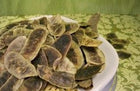
Description
Senna Leaf & Pods
(Senna alexandrina — formerly Cassia senna)
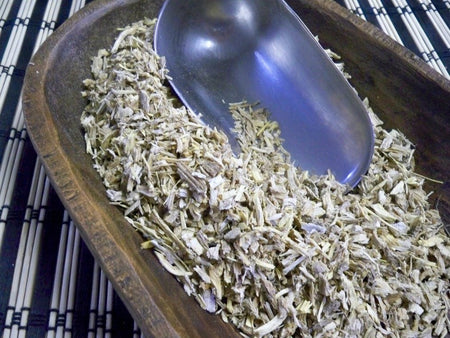
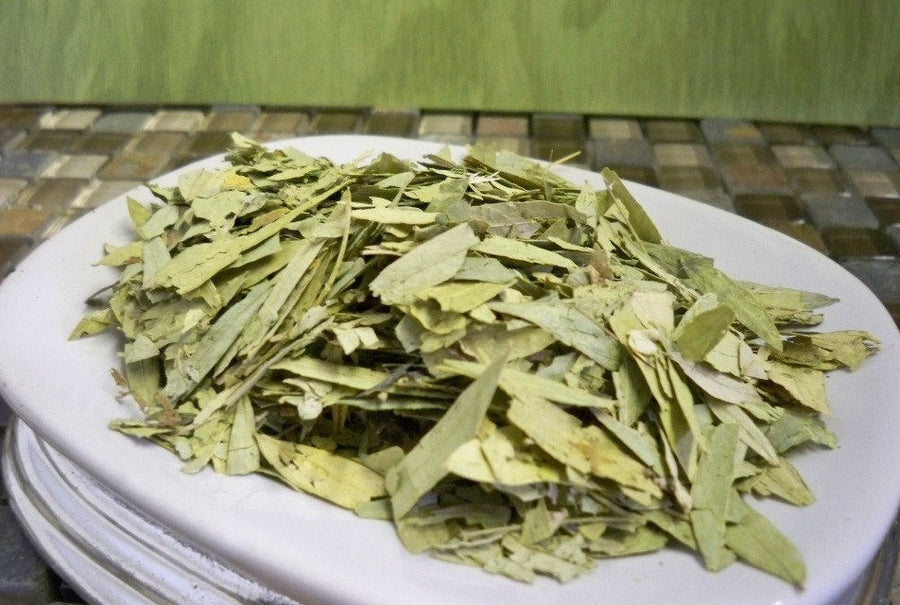
Senna alexandrina — Senna, Alexandrian Senna, or Khartoum Senna — is a small, shrubby legume of the family Fabaceae native to the arid regions of northeastern Africa, particularly Egypt, Sudan, and the Arabian Peninsula, and cultivated extensively in India (where it is known as Tinnevelly Senna) and other tropical regions. Senna has been one of the most important and widely used medicinal plants in the world for over 1,000 years — introduced to European medicine by Arab physicians in the 9th century, it was described by the 10th-century Arab physician Ibn Sina (Avicenna) in his Canon of Medicine as one of the most reliable and effective botanical laxatives known. Senna was traded along the ancient spice routes from Egypt and Arabia to Europe, where it became one of the most commercially important medicinal botanicals of the medieval and early modern period. Today, senna is one of the most thoroughly studied and widely used botanical laxatives in the world — it is an FDA-approved over-the-counter (OTC) laxative active ingredient, and it forms the basis of numerous prescription and OTC laxative preparations worldwide. Both the leaf and the pods (fruit) of Senna alexandrina are used — the pods are generally considered to produce a milder, more gradual effect than the leaf.
The laxative activity of senna is due to its exceptionally high content of sennosides — anthraquinone glycosides that are the primary active compounds and the FDA-recognized active ingredients for senna’s OTC laxative use. The sennosides include sennoside A (the primary active compound), sennoside B, sennoside C, sennoside D, along with their aglycones sennidin A and sennidin B, and related anthraquinone compounds including rhein, aloe-emodin, chrysophanol, kaempferol, isorhamnetin, mucilage, flavonoids, tannins, calcium oxalate, and resin. The pods contain the same sennosides but typically at lower concentrations than the leaf, producing a gentler laxative effect. Available in Leaf (Cut & Sifted) and Pods (Whole) forms.
Product Highlights
- Leaf and pods of Senna alexandrina — Alexandrian Senna / Khartoum Senna / Tinnevelly Senna
- One of the most important medicinal botanicals in Arab, European, and Ayurvedic medicine for over 1,000 years
- Described by Ibn Sina (Avicenna) in the Canon of Medicine (10th century) as one of the most reliable botanical laxatives known
- An FDA-approved OTC laxative active ingredient — one of the most thoroughly studied botanical laxatives in the world
- Active compounds: sennosides A and B — anthraquinone glycosides that are the FDA-recognized active ingredients
- Pods produce a milder, more gradual effect than the leaf — both are effective
- Available in Leaf (Cut & Sifted) and Pods (Whole) forms
How to Use
Herbal Tea (Leaf): Steep 1 teaspoon of cut & sifted senna leaf in 8 oz of hot water for 10 minutes; strain. Start with a small amount to assess individual response. Herbal Tea (Pods): Steep 4–6 whole pods in 8 oz of hot water for 10–15 minutes; strain. The pods produce a milder effect — a good starting point for those new to senna. Best taken in the evening — senna typically produces its effect 6–12 hours after consumption.
Available in Leaf Cut & Sifted and Whole Pods (2 oz, 4 oz, 8 oz).
These statements have not been evaluated by the Food and Drug Administration. This product is not intended to diagnose, treat, cure, or prevent any disease. Important safety information: Senna is a stimulant laxative — do not use for more than 7 consecutive days without consulting a healthcare provider. Do not use if you have or develop diarrhea, loose stools, or abdominal pain. Consult your healthcare provider before use if you are pregnant, nursing, taking medications (particularly diuretics, heart medications, or other laxatives), or have a medical condition including intestinal obstruction, Crohn’s disease, ulcerative colitis, appendicitis, or abdominal pain of unknown origin. Not recommended for children under 12 without medical supervision. Long-term use may cause dependence, electrolyte imbalance, and loss of normal bowel function. Keep out of reach of children.
Related products