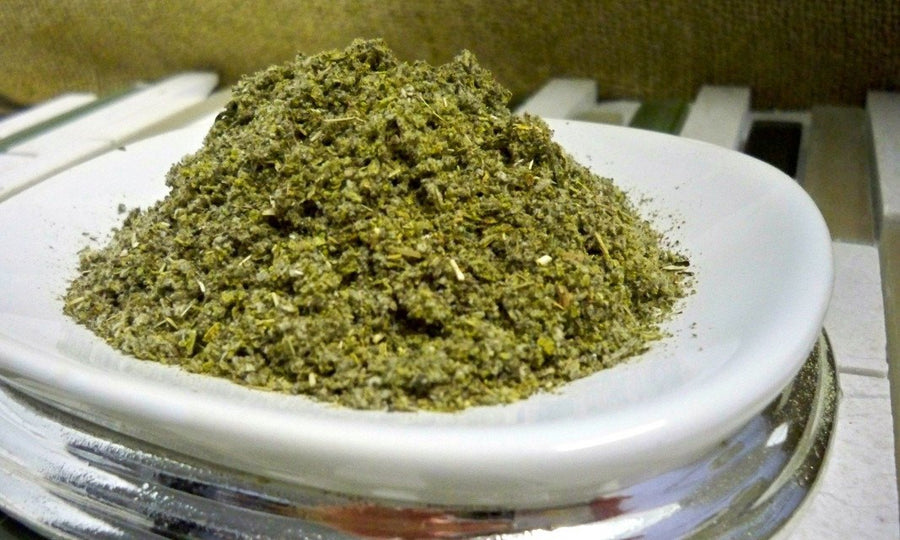
Description
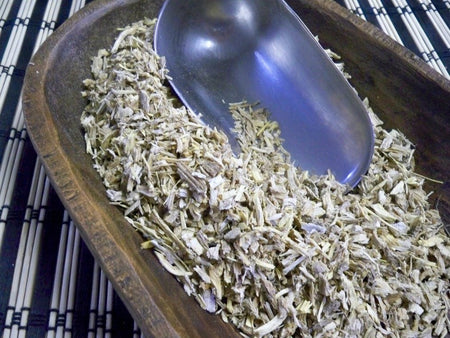
Sage Leaf
(Salvia officinalis)
Salvia officinalis — Common Sage, Garden Sage, or Culinary Sage — is one of the most important and widely used culinary herbs in the world, a woody, aromatic perennial shrub of the family Lamiaceae native to the northern Mediterranean coast, particularly the Dalmatian coast of Croatia and the Adriatic region, where it grows wild on rocky, sun-drenched hillsides and limestone outcroppings. The genus name Salvia derives from the Latin salvere — “to be well” or “to be saved” — a testament to the extraordinary esteem in which sage was held in the ancient and medieval world. The Romans considered sage a sacred herb, harvested with elaborate ritual ceremony; the medieval European proverb “Cur moriatur homo cui Salvia crescit in horto?” — “Why should a man die whilst sage grows in his garden?” — reflects the near-mythical reputation sage enjoyed in medieval European botanical tradition. In the 2017 botanical reclassification that also moved rosemary into the Salvia genus, Salvia officinalis was confirmed as the type species of one of the largest genera of flowering plants in the world — with over 1,000 species of Salvia distributed across every continent except Antarctica. Sage has been a cornerstone of Mediterranean cuisine for millennia and remains one of the defining flavors of Italian, French, and British culinary traditions.
Sage leaf is exceptionally rich in volatile essential oils and phytochemicals including thujone (alpha- and beta-thujone — the primary monoterpene ketones, responsible for sage’s characteristic pungent aroma; note: thujone is present in significant amounts and sage should be used in culinary quantities), 1,8-cineole (eucalyptol), camphor, borneol, bornyl acetate, alpha-pinene, beta-pinene, camphene, linalool, rosmarinic acid (a potent phenylpropanoid antioxidant — shared with rosemary), carnosic acid (a diterpene phenol antioxidant — shared with rosemary), carnosol, ursolic acid, oleanolic acid, flavonoids (luteolin, apigenin, hispidulin, genkwanin, salvigenin, cirsimaritin), caffeic acid, chlorogenic acid, vitamin K (exceptionally high — one of the richest herb sources), vitamin A (beta-carotene), vitamin C, calcium, iron, magnesium, zinc, and manganese. Available in Whole Leaf, Rubbed, and Powder forms.
Product Highlights
- Whole, rubbed, and powdered leaf of Salvia officinalis — Common Sage / Garden Sage / Culinary Sage
- Native to the Dalmatian coast of Croatia — one of the most important culinary herbs of the Mediterranean world
- The genus Salvia — from the Latin salvere, “to be well” — one of the largest flowering plant genera, with 1,000+ species
- Venerated in ancient Rome and medieval Europe as one of the most important botanical herbs known
- Exceptionally rich in rosmarinic acid, carnosic acid, thujone, 1,8-cineole, luteolin, and vitamin K
- A cornerstone of Italian, French, and British culinary traditions for millennia
- Available in Whole Leaf, Rubbed, and Powder forms
How to Use
Culinary: One of the great culinary herbs — use with pork, poultry, lamb, sausages, and stuffings. The classic pairing with brown butter (burro e salvia) is one of the simplest and most elegant preparations in Italian cuisine — fry whole sage leaves in butter until crisp and golden, then toss with pasta or gnocchi. Stuffing & Dressing: The defining herb of traditional poultry stuffing and Thanksgiving dressing. Saltimbocca: The essential herb of the classic Roman dish saltimbocca alla Romana — veal with prosciutto and sage. Infused Butter & Oil: Steep in melted butter or olive oil for a fragrant finishing oil. Herbal Tea: Steep 1 teaspoon of rubbed sage in 8 oz of hot water for 5–10 minutes; strain. The flavor is strongly aromatic, slightly camphoraceous, and distinctly savory. Aromatics: Add to sachets and potpourri for a clean, herbaceous fragrance. Smudging: Dried sage bundles are a traditional aromatic and ceremonial preparation.
Available in Whole Leaf, Rubbed, and Powder (2 oz, 4 oz, 8 oz, 16 oz).
Keep out of reach of children. Use in culinary amounts only — sage contains thujone, which can be harmful in large quantities. Not recommended in large amounts during pregnancy.
Related products