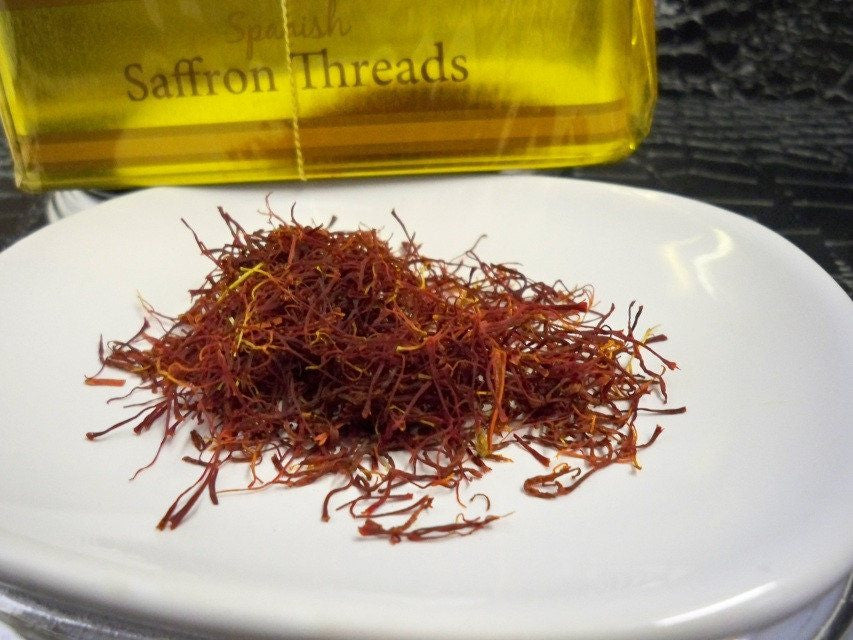
Description
Saffron, Spanish — Premium Grade
(Crocus sativus)
Crocus sativus — Saffron — is the most expensive spice in the world by weight, and one of the most extraordinary botanical commodities in the history of human civilization. The vivid crimson-red stigmas of the saffron crocus have been harvested, traded, and treasured for over 3,500 years — with evidence of saffron use in ancient Minoan Crete (circa 1600 BC), ancient Persia, ancient Egypt, ancient Greece, and ancient Rome. Alexander the Great bathed in saffron-infused water to heal his battle wounds; Cleopatra used saffron in her cosmetic preparations; the ancient Romans scattered saffron across theater floors and streets during festivals; and the Phoenicians traded it across the Mediterranean as one of the most prized commodities of the ancient world. The extraordinary price of saffron — historically more valuable by weight than gold — is a direct consequence of the extraordinary labor required to produce it: each Crocus sativus flower produces only three stigmas, which must be hand-harvested by skilled workers during the brief autumn flowering period (typically just two to three weeks), then carefully dried. It takes approximately 150,000–200,000 flowers — and 400–500 hours of hand labor — to produce a single kilogram of dried saffron. Our Spanish Saffron is sourced from the La Mancha region of Spain — home to Azafrán de La Mancha, one of the most celebrated and protected saffron appellations in the world, known for producing saffron of exceptional color strength, aroma, and flavor. Sold per gram (28.34 grams per ounce).
Saffron’s extraordinary sensory and phytochemical profile is defined by three primary compounds: crocin and crocetin (carotenoid glycosides — responsible for saffron’s brilliant golden-yellow color; crocin is one of the most water-soluble carotenoids known), picrocrocin (responsible for saffron’s characteristic bitter taste — the glycoside precursor of safranal), and safranal (the primary volatile compound responsible for saffron’s distinctive, complex aroma — formed from picrocrocin during drying). Saffron also contains kaempferol, quercetin, isorhamnetin (flavonoids), zeaxanthin, lycopene, alpha- and beta-carotene, vitamin B2 (riboflavin), vitamin C, manganese, iron, magnesium, potassium, and phosphorus. Saffron quality is measured by ISO 3632 standards based on three parameters: crocin content (color strength — ISO category I requires ≥190 units), picrocrocin content (bitterness — ≥70 units), and safranal content (aroma — 20–50 units). Available in Thread (Whole Stigma) form, sold per gram.
Product Highlights
- Whole stigma threads of Crocus sativus — Spanish Saffron, Premium Grade
- The most expensive spice in the world by weight — more valuable than gold throughout much of human history
- Sourced from La Mancha, Spain — home of Azafrán de La Mancha, one of the world’s most celebrated saffron appellations
- Used for over 3,500 years — documented in ancient Minoan, Persian, Egyptian, Greek, and Roman civilizations
- Requires 150,000–200,000 hand-harvested flowers to produce a single kilogram — the source of its extraordinary value
- Defined by three signature compounds: crocin (color), picrocrocin (bitterness), and safranal (aroma)
- Sold per gram (28.34 grams per ounce)
How to Use
Blooming (Essential First Step): Always bloom saffron before use — steep the threads in 2–3 tablespoons of warm (not boiling) water, broth, or milk for 15–30 minutes. This releases the crocin pigment and safranal aroma fully. Use the entire bloomed liquid in your recipe. Paella: The defining ingredient of authentic Spanish paella — bloom and add to the rice for the characteristic golden color and complex flavor. Risotto Milanese: The essential ingredient of risotto alla Milanese — the classic Milanese saffron risotto. Bouillabaisse: A cornerstone of the classic Provençal fish stew. Persian Rice (Chelow): Bloom and drizzle over Persian-style basmati rice for the traditional golden crust (tahdig). Desserts: Use in saffron ice cream, panna cotta, kheer (Indian rice pudding), and Persian sholeh zard (saffron rice pudding). Breads: Add to Swedish lussekatter (St. Lucia saffron buns) and Cornish saffron cake. Beverages: Steep in warm milk with honey and cardamom for a traditional saffron milk (kesar doodh).
Sold per gram. Premium Grade Spanish Saffron.
Keep out of reach of children. Use in very small amounts — saffron is extraordinarily potent; a pinch (0.1–0.3 grams) is sufficient for most recipes. Consult your healthcare provider before use if you are pregnant — large amounts of saffron should be avoided during pregnancy.
Related products