

Description
Rosehips
(Rosa canina)
The rosehip — the fruit of Rosa canina, the Dog Rose — is one of the most nutritionally remarkable and historically significant wild fruits in the temperate world. Rosa canina is a vigorous, arching wild rose native to Europe, northwest Africa, and western Asia, and now naturalized across North America, where it grows in hedgerows, woodland edges, and roadsides, producing fragrant pink flowers in early summer followed by brilliant scarlet-to-orange oval fruits in autumn. The rosehip has been gathered and used as a food and botanical preparation since prehistoric times — it is one of the oldest known wild fruits consumed by humans, with evidence of use dating back to the Stone Age. During World War II, when citrus fruits were unavailable in Britain due to wartime rationing, the British government organized a national rosehip collection program — schoolchildren across the country gathered millions of pounds of wild rosehips, which were processed into rosehip syrup and distributed as a vitamin C supplement to maintain the health of the civilian population. This wartime program brought rosehips to national prominence and established their reputation as one of the richest natural sources of vitamin C available. Rosa canina has been used in European, Middle Eastern, and North African traditional botanical practice for centuries, and it remains one of the most widely consumed herbal teas in the world.
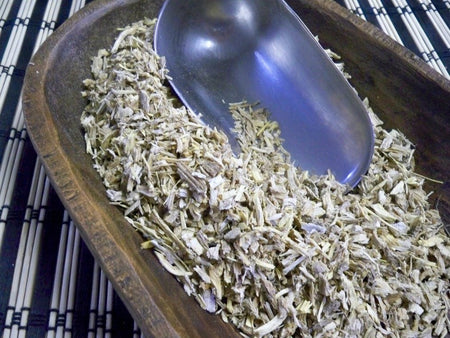
Rosehips are extraordinarily rich in vitamin C (ascorbic acid — fresh rosehips contain 10–100 times more vitamin C per gram than oranges, making them one of the richest plant sources known; note that drying reduces but does not eliminate vitamin C content), vitamin A (beta-carotene and other carotenoids — including lycopene, rubixanthin, zeaxanthin, and lutein, responsible for the vivid red-orange color), vitamin E (tocopherols), vitamin K, vitamin B complex (including folate), flavonoids (quercetin, kaempferol, isorhamnetin, rutin, tiliroside), ellagitannins (including agrimoniin and lambertianin), galactolipids (GOPO — a galactolipid unique to rosehips and the subject of significant research), pectin (exceptionally high — rosehips are one of the richest pectin sources known), malic acid, citric acid, tartaric acid, calcium, potassium, magnesium, iron, phosphorus, zinc, and essential fatty acids (linoleic acid, alpha-linolenic acid — in the seed). Available in Whole, Cut & Sifted, and Powder forms.
Product Highlights
- Fruit of Rosa canina — Dog Rose / Rosehip
- One of the richest known plant sources of vitamin C — fresh rosehips contain up to 100x more vitamin C per gram than oranges
- Gathered and consumed by humans since the Stone Age — one of the oldest wild fruits in the human diet
- Processed into rosehip syrup by the British government during WWII as a national vitamin C supplement
- Exceptionally rich in carotenoids (lycopene, rubixanthin, zeaxanthin, lutein), flavonoids, ellagitannins, and pectin
- Contains GOPO — a unique galactolipid found in rosehips and the subject of significant modern research
- Available in Whole, Cut & Sifted, and Powder forms
How to Use
Herbal Tea (Infusion/Decoction): Steep 1–2 teaspoons of cut & sifted rosehips in 8 oz of hot water for 10–15 minutes; strain carefully (the fine hairs inside the fruit can be irritating — always strain through a fine mesh). The flavor is tart, fruity, and pleasantly tangy — reminiscent of hibiscus. Rosehip Syrup: Simmer rosehips in water, strain, and sweeten with honey or sugar for a traditional vitamin C-rich syrup. Jam & Jelly: A classic European preserve — rosehip jam and jelly are traditional autumn preparations. Smoothies: Blend powder into smoothies for a nutritional boost. Herbal Blends: Pairs beautifully with hibiscus, elderberry, and hawthorn berry in fruity, antioxidant-rich herbal tea blends. Culinary: Use in sauces, soups, and desserts for a tart, fruity note.
Available in Whole, Cut & Sifted, and Powder (4 oz, 8 oz, 16 oz).
These statements have not been evaluated by the Food and Drug Administration. This product is not intended to diagnose, treat, cure, or prevent any disease. Consult your healthcare provider before use if you are pregnant, nursing, taking medications, or have a medical condition. Always strain rosehip preparations through a fine mesh — the fine hairs inside the fruit can cause irritation if consumed. Keep out of reach of children.