Description
Raspberry Lemon Moringa Tea
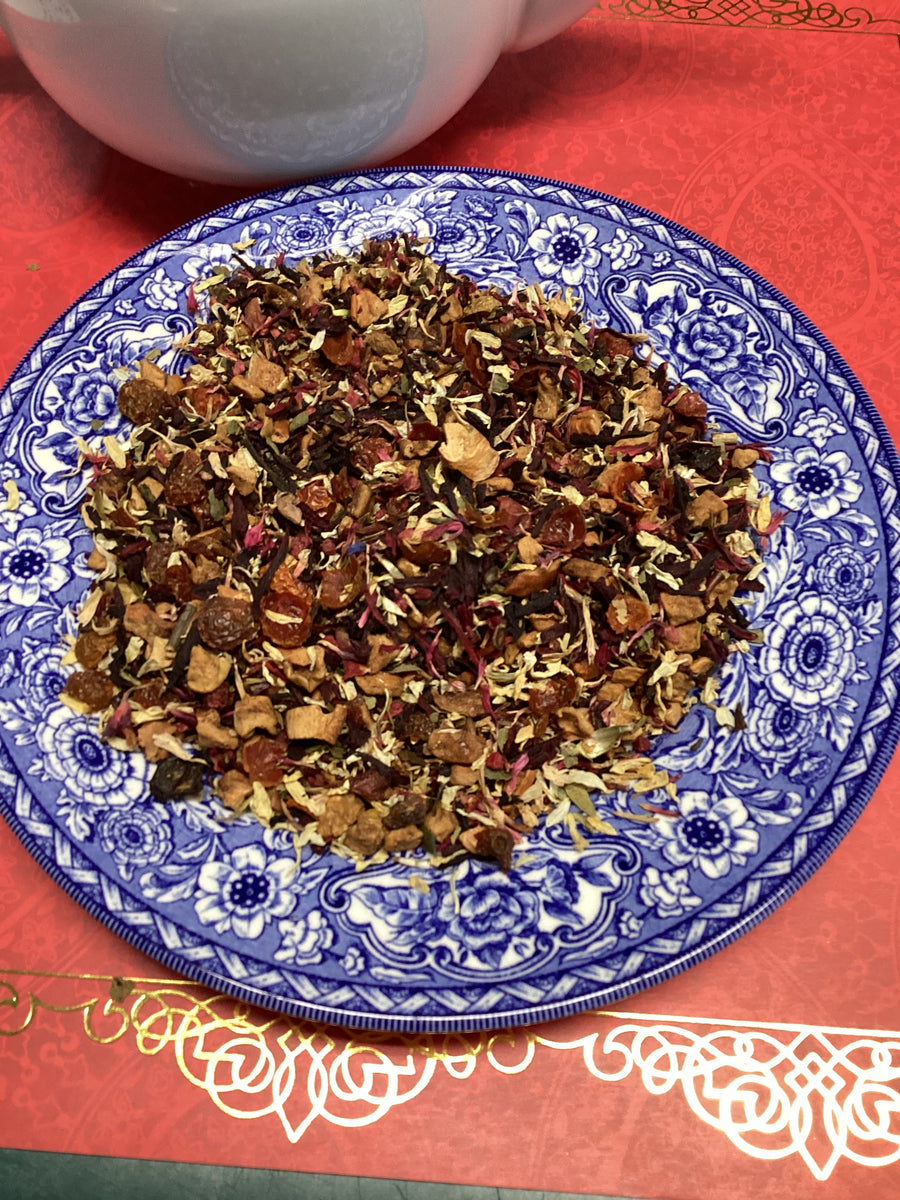
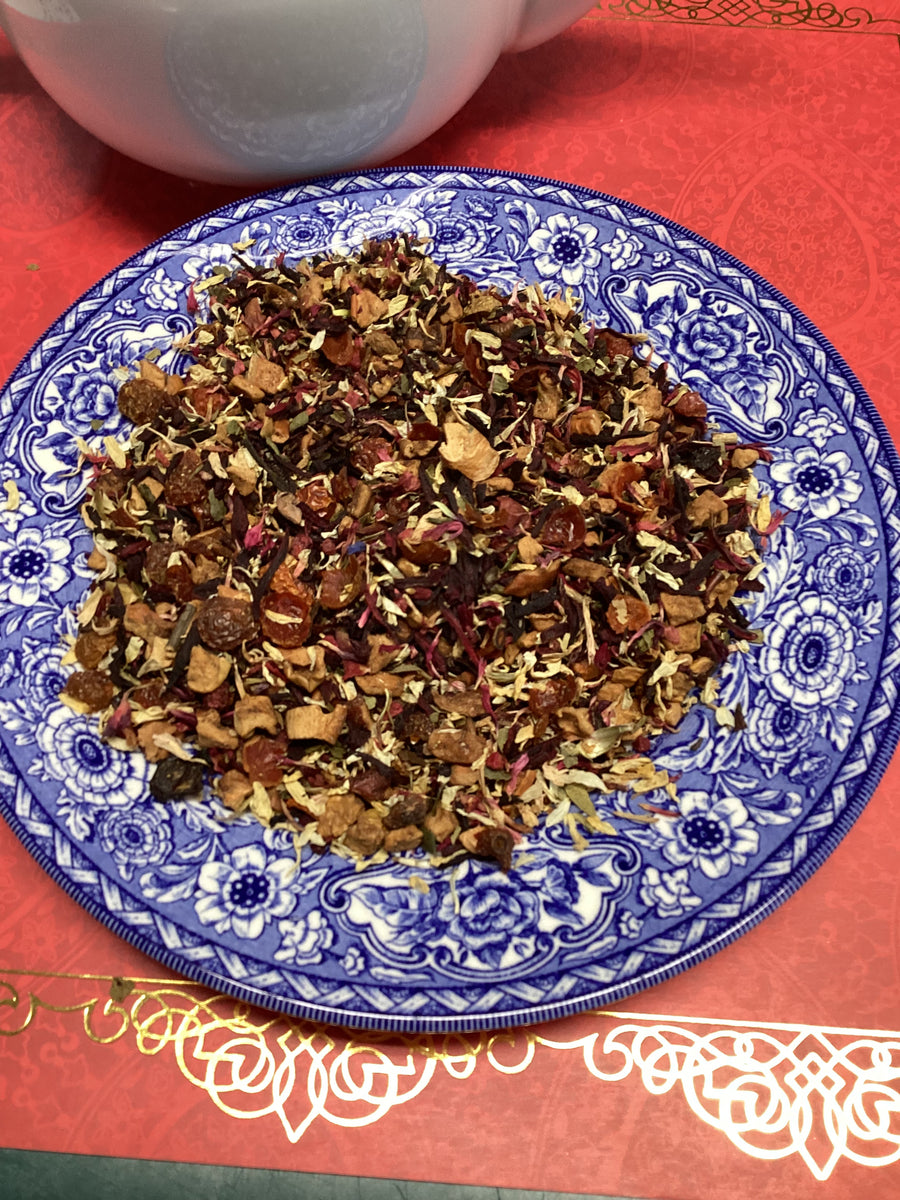
A bright, fruity, naturally caffeine-free botanical blend built around the nutritional powerhouse of the plant world — moringa leaf — paired with the vivid tartness of hibiscus and rosehip, the sweetness of dried raspberry and apple, and the fresh citrus lift of lemon. Beautiful served hot, and absolutely spectacular over ice on a summer afternoon.
Ingredients: Apple, Hibiscus, Rosehip, Lemon, Strawberry Leaf, Moringa Leaf (Moringa oleifera), Chamomile, Cornflower Petals, Dried Raspberries, Natural Flavors. Naturally caffeine-free.
Key Botanicals
- Moringa Leaf (Moringa oleifera) — the dried leaves of the moringa tree, native to the sub-Himalayan regions of northern India and widely cultivated throughout the tropics and subtropics. Moringa oleifera — known as the drumstick tree, horseradish tree, or miracle tree — is one of the most nutritionally dense leafy botanicals known, with a phytochemical profile that includes isothiocyanates (primarily moringin and 4-O-(alpha-L-rhamnosyloxy)benzyl isothiocyanate), glucosinolates, quercetin, kaempferol, rutin, chlorogenic acid, caffeic acid, beta-carotene (provitamin A), vitamin C, vitamin E (alpha-tocopherol), vitamin K, B vitamins (B1, B2, B3, B6, folate), complete protein (containing all 9 essential amino acids — unusual for a leafy botanical), calcium (gram for gram, significantly higher than cow’s milk), potassium, iron, magnesium, phosphorus, zinc, and omega-3 fatty acids (alpha-linolenic acid). Moringa has been used as a food and botanical in Ayurvedic tradition for over 4,000 years and is consumed as a daily food across South Asia, West Africa, and the Philippines.
- Hibiscus (Hibiscus sabdariffa) — the dried calyces of the roselle plant; responsible for the tea’s vivid ruby-red color and characteristic tart, cranberry-like flavor; rich in anthocyanins, hibiscus acid, citric acid, malic acid, quercetin, luteolin, and vitamin C
- Rosehip (Rosa canina) — the fruit of the dog rose, one of the richest plant sources of vitamin C in the European botanical tradition; also contains beta-carotene, lycopene, lutein, zeaxanthin, quercetin, rutin, tiliroside, pectin, tannins, and organic acids (citric, malic, quinic); contributes a pleasantly tart, fruity depth
- Chamomile (Matricaria chamomilla) — the dried flower heads of German chamomile; rich in alpha-bisabolol, apigenin, luteolin, quercetin, and caffeic acid; contributes a soft, apple-like floral note that rounds the blend beautifully
- Strawberry Leaf (Fragaria × ananassa) — the dried leaves of the cultivated strawberry; contains ellagic acid, ellagitannins, quercetin, kaempferol, rutin, caffeic acid, chlorogenic acid, vitamin C, and tannins; a mild, slightly astringent botanical that adds body to the blend
- Dried Raspberries (Rubus idaeus) — rich in ellagic acid, ellagitannins, anthocyanins (primarily cyanidin-3-glucoside and cyanidin-3-sophoroside), quercetin, kaempferol, vitamin C, manganese, and dietary fiber; contribute the blend’s characteristic sweet-tart raspberry character
- Cornflower Petals (Centaurea cyanus) — brilliant blue petals used as a visual botanical; contribute a striking color contrast in the dry blend
How to Brew
Hot: Steep 1–2 teaspoons per 8 oz of water at 200–208°F for 5–7 minutes. Iced: This blend is exceptional iced — brew double-strength (2 teaspoons per 8 oz), steep 6–7 minutes, strain, and pour over ice. The color is a vivid ruby-pink and the flavor is bright, fruity, and refreshing. A touch of honey or raw cane sugar is a lovely pairing. For Children: A naturally caffeine-free, fruit-forward blend — serve lightly sweetened and well-chilled.
Caffeine-free. Keep out of reach of children. Store in a cool, dry place away from direct sunlight.
These statements have not been evaluated by the Food and Drug Administration. This product is not intended to diagnose, treat, cure, or prevent any disease.