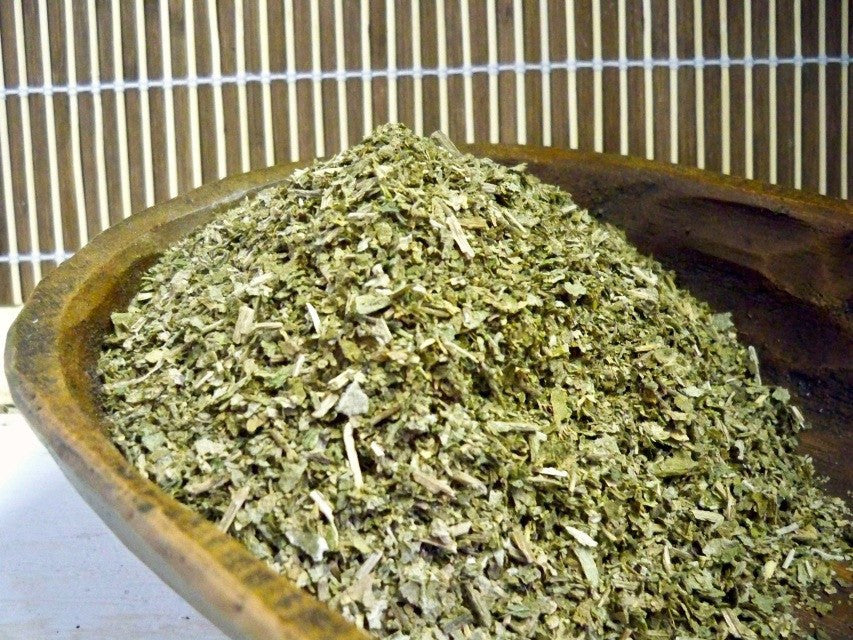
Description
Lobelia — Herb
(Lobelia inflata)
Lobelia is one of the most historically significant and botanically distinctive native wildflowers of eastern North America — a slender, branching annual or biennial of the bellflower family (Campanulaceae) found growing in open woodlands, meadows, roadsides, and disturbed ground from Nova Scotia to Georgia and westward to Kansas. Lobelia inflata — Indian Tobacco — takes its common name from its historical use by various Native American peoples, who smoked the dried leaves in pipes, and its species name inflata from the inflated, balloon-like seed pods that develop after flowering. The small, pale violet-blue flowers bloom from midsummer through fall, and the entire plant — leaves, stems, flowers, and seeds — has a sharp, acrid, tobacco-like taste that is immediately distinctive.
Lobelia has a rich and sometimes controversial history in American herbal medicine. It was the cornerstone herb of Samuel Thomson (1769–1843), the founder of Thomsonian medicine — one of the most popular alternative medical movements in 19th-century America, which at its peak claimed millions of adherents. Thomson called lobelia “the most important article I make use of” and used it as the foundation of his botanical system, which emphasized emetic cleansing as a path to health. Lobelia was so central to Thomsonian practice that Thomson was tried for murder in 1809 after a patient died following lobelia treatment — he was acquitted, but the case highlighted the herb’s potency and the importance of careful use. The herb was also used by the Eclectic physicians of the 19th century, who documented its properties extensively in their materia medica.
The plant contains a distinctive array of alkaloids including lobeline (the primary alkaloid, a piperidine compound structurally similar to nicotine), lobelanine, lobelanidine, norlobelanine, isolobelanine, lobinaline, sedamine, flavonoids, chelidonic acid, resin, and volatile oils. The alkaloid profile gives lobelia its characteristic sharp, acrid taste and its potent physiological activity — lobeline in particular has been extensively studied for its structural similarity to nicotine.
Product Highlights
- Cut & sifted and powdered herb of Lobelia inflata — Lobelia / Indian Tobacco
- A native wildflower of eastern North America — found from Nova Scotia to Georgia
- The cornerstone herb of Thomsonian medicine — the most popular botanical movement in 19th-century America
- Rich in lobeline, lobelanine, lobelanidine, chelidonic acid, and flavonoids
- Sharp, acrid, tobacco-like taste — immediately distinctive among North American botanicals
- Available in Cut & Sifted and Powder forms
How to Use
Tincture: Lobelia is most commonly used in small-dose tincture preparations — traditionally prepared in alcohol. Herbal Formulas: Historically combined with other botanicals in small amounts as part of compound herbal formulations. Topical Preparations: Used in liniments and poultices in traditional practice. Smoking Blends: Historically smoked by Native American peoples and used in herbal smoking blends as a tobacco alternative.
Available in Cut & Sifted (4 oz, 8 oz, 16 oz) and Powder (4 oz, 8 oz, 16 oz).
These statements have not been evaluated by the Food and Drug Administration. This product is not intended to diagnose, treat, cure, or prevent any disease. WARNING: Lobelia (Lobelia inflata) contains lobeline and other potent alkaloids and should be used with extreme caution. Lobelia is toxic in excessive doses and has a narrow margin of safety — overdose may cause nausea, vomiting, diarrhea, tremors, rapid heart rate, low blood pressure, and in severe cases, respiratory depression. Do not use lobelia without guidance from a qualified healthcare provider experienced with botanical medicine. Not for use by persons with heart disease, high blood pressure, tobacco sensitivity, or seizure disorders. Do not use if pregnant or nursing. Keep out of reach of children. Not recommended for internal use without professional supervision.
Related products