Description
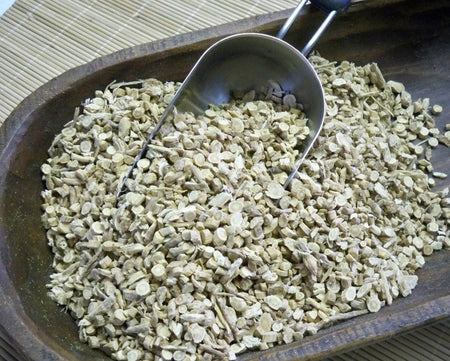
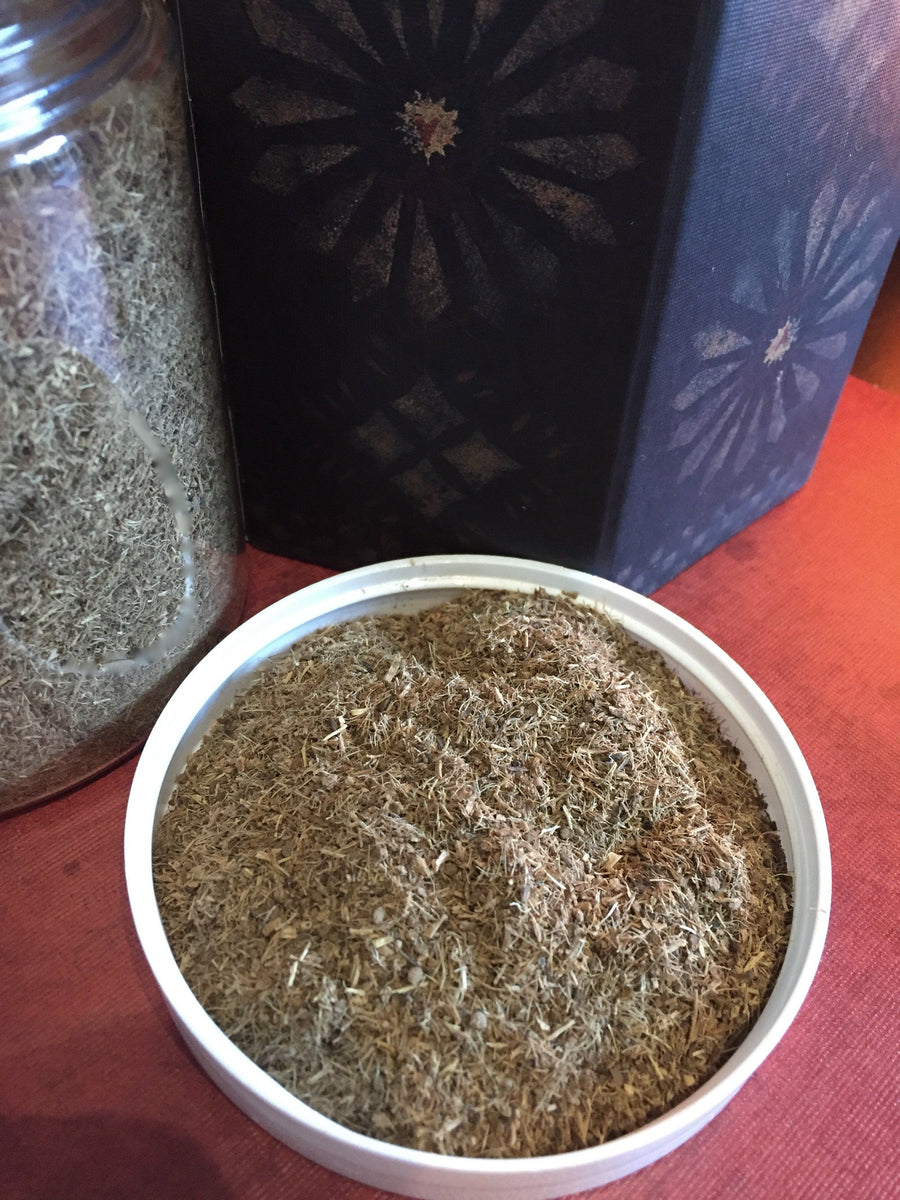
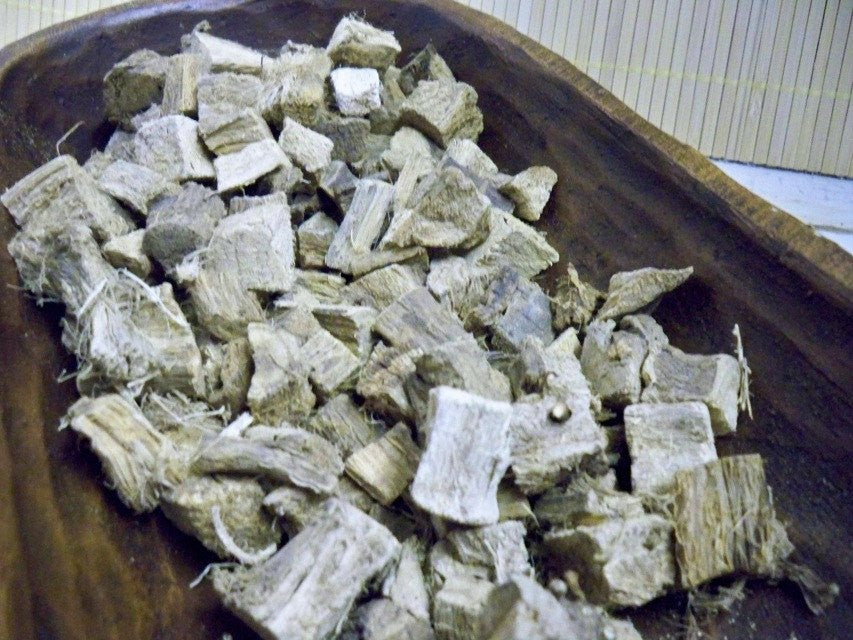
Kudzu Root — Cut & Sifted
(Pueraria montana var. lobata)
Kudzu is one of the great botanical paradoxes of the modern world — simultaneously one of the most revered medicinal roots in East Asian herbal tradition and one of the most notorious invasive plants in American ecological history. Pueraria montana var. lobata, a vigorous, climbing vine of the legume family (Fabaceae) native to China, Japan, and Southeast Asia, was introduced to the United States at the 1876 Philadelphia Centennial Exposition as an ornamental plant, and later promoted aggressively by the U.S. Soil Conservation Service in the 1930s and 1940s as a tool for erosion control across the American South. It proved spectacularly effective — and spectacularly unstoppable. Today kudzu covers an estimated 7–9 million acres of the southeastern United States, earning its nickname “the vine that ate the South.”
In East Asia, however, kudzu root — known as gé gēn (葛根) in Traditional Chinese Medicine — has been a respected botanical for over 2,000 years, documented in the Shennong Bencao Jing (Divine Farmer’s Classic of Materia Medica), one of the foundational texts of Chinese herbal medicine. The starchy root has also been a significant food source in Japan and China, where kudzu starch (kuzu in Japanese) is prized as a premium culinary thickener for sauces, soups, and traditional wagashi confections — considered superior to cornstarch for its clarity and texture.
The root contains a rich array of phytochemicals including puerarin (a C-glycoside isoflavone unique to kudzu and one of the most studied compounds in the root), daidzin, daidzein, formononetin, biochanin A, genistin, genistein, kudzu saponins, terpenes, starch (up to 10–14% of the dry root weight), and amino acids. Our Kudzu Root is available Cut & Sifted.
Product Highlights
- Cut & sifted root of Pueraria montana var. lobata — Kudzu Root / Gé Gēn (葛根)
- Documented in Chinese herbal tradition for over 2,000 years — referenced in the Shennong Bencao Jing
- Rich in puerarin, daidzin, daidzein, formononetin, and kudzu saponins
- The same vine that famously “ate the South” — now put to good use
- Kudzu starch (kuzu) is a prized culinary thickener in Japanese and Chinese cuisine
- Available in 4 oz, 8 oz, and 16 oz sizes
- No additives, fillers, or artificial ingredients
How to Use
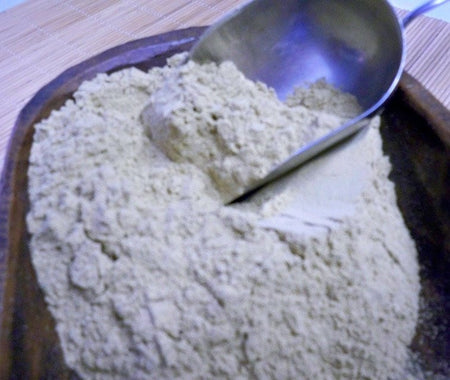
Herbal Tea / Decoction: Simmer 1–2 teaspoons of cut & sifted kudzu root in 2 cups of water for 20–30 minutes; strain before use. The flavor is mild, slightly sweet, and starchy. Culinary Thickener: Grind cut & sifted root into a fine powder and use as a thickener for sauces, soups, gravies, and desserts — dissolve in cold water first before adding to hot liquids, similar to cornstarch. Tincture: Use in alcohol or glycerin-based tincture preparations. Capsules: Grind and fill empty capsules for a convenient supplement form. Blended Formulas: Traditionally combined with other botanicals in TCM-inspired herbal formulations.
Available in Cut & Sifted (4 oz, 8 oz, 16 oz).
These statements have not been evaluated by the Food and Drug Administration. This product is not intended to diagnose, treat, cure, or prevent any disease. Consult your healthcare provider before use, especially if you are pregnant, nursing, taking medications, or have a medical condition. Keep out of reach of children.
Related products