Description
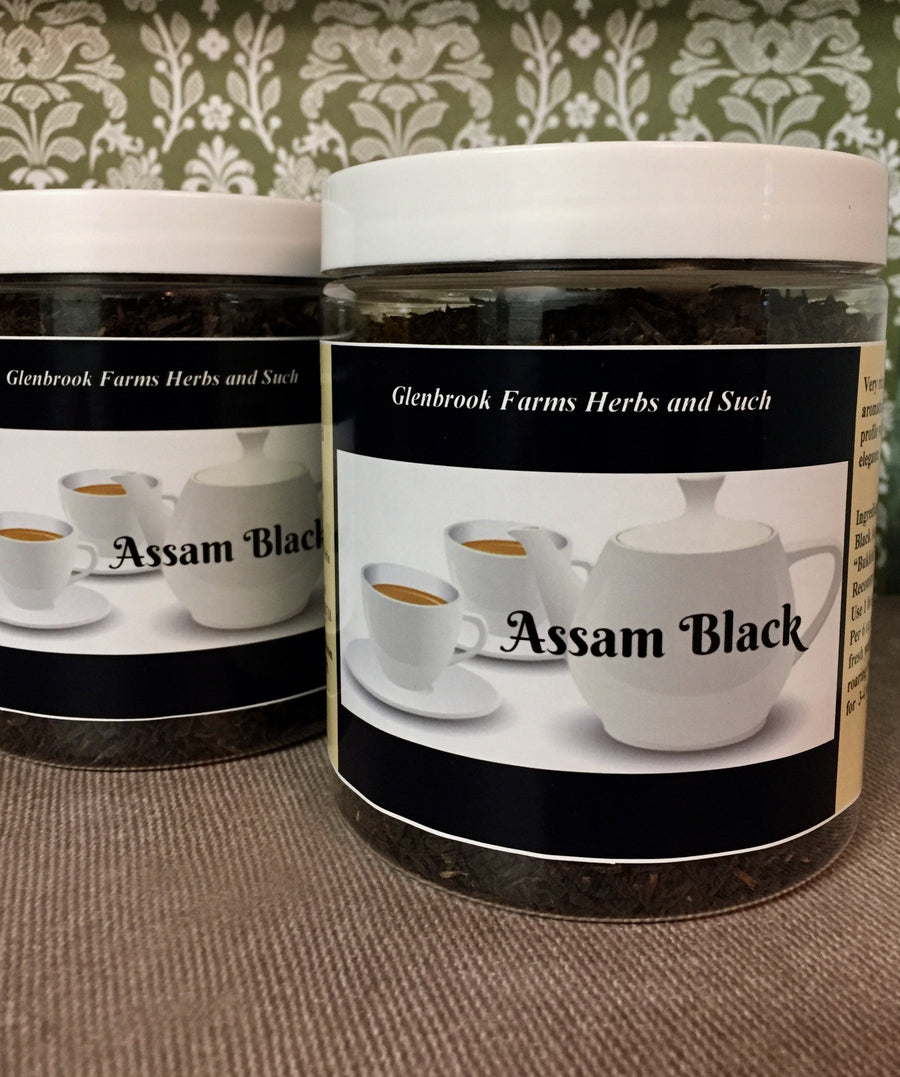
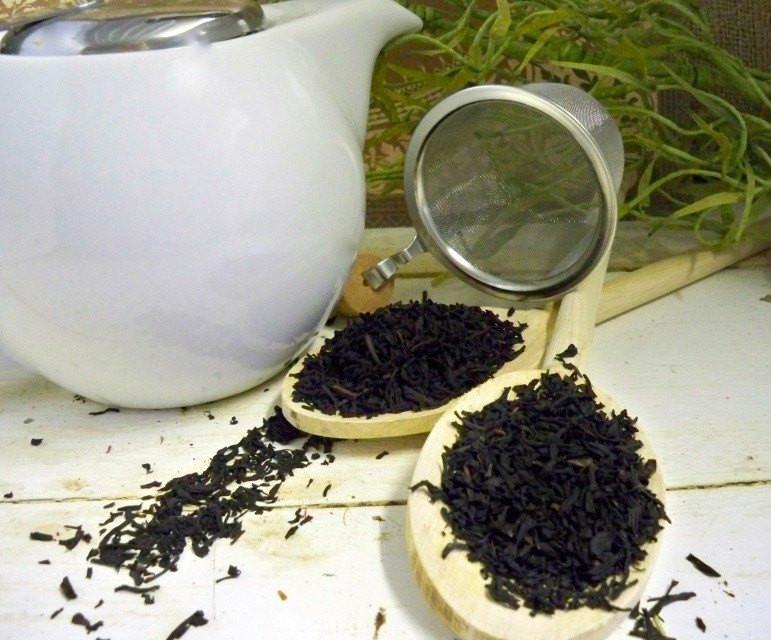
Assam Black Tea TGFOP 1
(Camellia sinensis — Assam var.)
Camellia sinensis var. assamica — Assam Tea — is the large-leafed variety of the tea plant of the family Theaceae, native to the Brahmaputra River valley of the northeastern Indian state of Assam, where it grows in the lowland tropical rainforest at elevations of 45 to 60 meters above sea level — the only major tea-growing region in the world situated at near sea level rather than in highland elevations. Assam is the largest tea-producing region in the world by volume, encompassing over 800 tea estates across a 50,000 square kilometer valley, and producing approximately 50% of India’s total tea output and roughly 15% of the world’s tea supply. The assamica variety of Camellia sinensis was independently discovered growing wild in the Assam jungle in 1823 by Scottish explorer Robert Bruce, who observed the Singpho people brewing it as a beverage — a discovery that ultimately led to the establishment of the Indian tea industry and broke the Chinese monopoly on commercial tea production. Assam tea is distinguished from Chinese and Darjeeling teas by its larger leaf size, higher caffeine content, and characteristically bold, malty, full-bodied flavor — a profile that makes it the backbone of classic British breakfast tea blends, Irish breakfast tea, and masala chai.
Our Assam Black Tea is a TGFOP 1 grade — Tippy Golden Flowery Orange Pekoe, First Quality — sourced from the Bukhial Estate, the largest private tea estate in the world, located in the Assam region near the Nagaland border. This is a second flush harvest — the second plucking of the season (June–July), widely regarded as the peak of Assam tea quality, producing a cup with greater depth, maltiness, and complexity than the first flush. The designation TGFOP 1 indicates a high proportion of golden tips (the youngest, most tender leaf buds) and flowery orange pekoe leaves — the finest grade of whole-leaf Assam black tea. The resulting cup is rich, full-bodied, and elegantly malty with a deep amber liquor and a smooth, satisfying finish.
Camellia sinensis leaf (black tea, fully oxidized) contains a well-documented phytochemical profile including caffeine (typically 2.5–4% of dry weight — among the highest of any tea grade), theobromine, theophylline, theaflavins (the orange-red pigments formed during oxidation — including theaflavin, theaflavin-3-gallate, theaflavin-3’-gallate, and theaflavin-3,3’-digallate), thearubigins (the complex brown polymeric compounds responsible for the deep color and body of black tea), catechins (residual — including EGCG, EGC, ECG, and EC), quercetin, kaempferol, myricetin, rutin, gallic acid, ellagic acid, chlorogenic acid, caffeic acid, theogallin, L-theanine (the amino acid unique to Camellia sinensis — responsible for the characteristic calm-alertness associated with tea), gamma-aminobutyric acid (GABA), fluoride, potassium, manganese, magnesium, calcium, phosphorus, zinc, and vitamin B2 (riboflavin). Available in loose leaf form.
Product Highlights
- TGFOP 1 grade — Tippy Golden Flowery Orange Pekoe, First Quality — the finest grade of whole-leaf Assam black tea, with a high proportion of golden tips
- Sourced from Bukhial Estate — the largest private tea estate in the world, located in Assam near the Nagaland border
- Second flush harvest (June–July) — the peak of the Assam tea season, producing the boldest, maltiest, most complex cup of the year
- Camellia sinensis var. assamica — the large-leafed Assam variety, independently discovered growing wild in 1823 by Scottish explorer Robert Bruce, observed being brewed by the Singpho people
- Assam is the largest tea-producing region in the world — producing ~50% of India’s tea output and ~15% of global tea supply
- The backbone of classic British breakfast tea, Irish breakfast tea, and masala chai blends worldwide
- Contains L-theanine — the amino acid unique to Camellia sinensis, found alongside caffeine in all true teas
- Rich in theaflavins and thearubigins — the oxidation compounds responsible for Assam’s characteristic deep amber liquor, bold body, and malty flavor
How to Brew
Water Temperature: Freshly boiled water (212°F / 100°C) — Assam black tea is fully oxidized and requires boiling water, unlike green or white teas. Leaf Ratio: 1 teaspoon (2–3g) per 8 oz of water. Steep Time: 3–5 minutes — 3 minutes for a bright, lively cup; 5 minutes for a fuller, bolder brew. Longer steeping will increase bitterness. With Milk: Assam’s bold, malty character is ideally suited to milk — add whole milk or a plant-based alternative to taste. A classic British-style cup uses a splash of cold milk added to the cup before pouring. With Sugar: Pairs beautifully with a small amount of raw cane sugar, honey, or jaggery in the South Asian tradition. Masala Chai: Simmer 1 teaspoon of Assam leaf with 4 oz of water, 4 oz of whole milk, and your choice of spices (cardamom, ginger, cinnamon, clove, black pepper) for 5–7 minutes; strain and sweeten to taste. Iced Tea: Brew double-strength (2 teaspoons per 8 oz), steep 4 minutes, strain, and pour over ice.
Contains naturally occurring caffeine. Keep out of reach of children. Store in a cool, dry place away from direct sunlight in an airtight container.
These statements have not been evaluated by the Food and Drug Administration. This product is not intended to diagnose, treat, cure, or prevent any disease.
Related products